



Solo Female Trekking in Nepal: Safety Tips & Best Routes
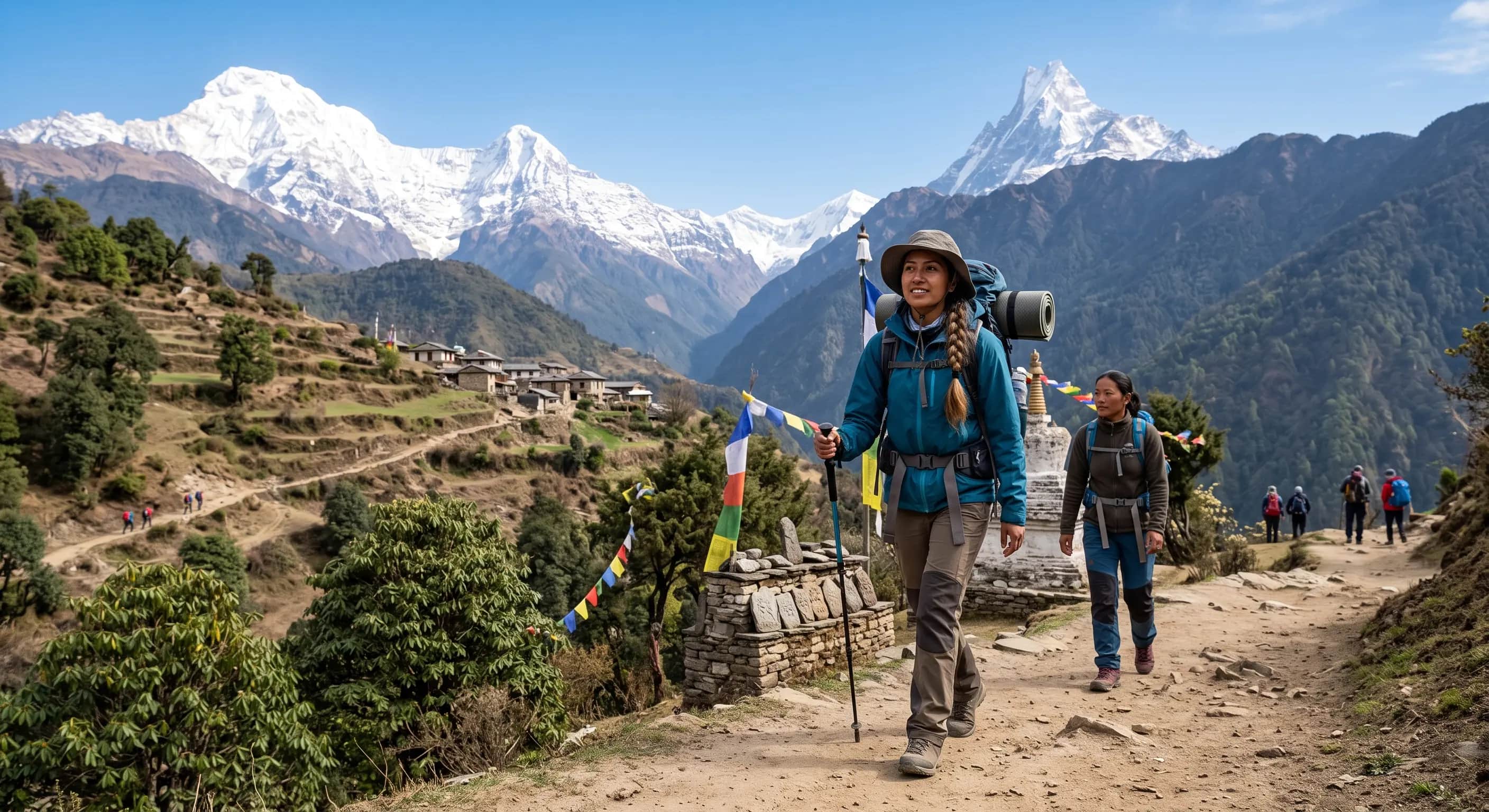
Nepal is a popular destination for solo travelers, including women traveling on their own. Its established trekking infrastructure, welcoming mountain communities and long tradition of hospitality make it an appealing destination for women who want to experience the Himalayas.
However, trekking in Nepal is different from traveling through cities or established tourist destinations. Remote trails, high altitude, changing weather and limited access to medical facilities mean that good preparation is essential.
There have also been important changes to Nepal's trekking regulations. Foreign trekkers must use a licensed guide and obtain TIMS through a registered trekking agency on many of the country's major trekking routes. The exact requirements depend on the route you choose.
If you are planning solo female trekking in Nepal, this guide covers the current guide rules, practical safety advice, cultural etiquette and some of the best trekking routes for women.
1. Do Solo Female Trekkers Need a Guide in Nepal?
One of the first things to understand when planning solo female trekking in Nepal is that "solo" does not necessarily mean trekking completely alone.
Under the revised TIMS provisions, licensed guides and TIMS are mandatory on a long list of trekking routes, including Everest Base Camp, Langtang, Mardi Himal, Poon Hill-ABC, Annapurna Circuit, Manaslu and several restricted-area routes.
What does this mean for solo female trekkers?
- You can still travel to Nepal and plan your own trip independently.
- If your chosen trekking route falls under the mandatory guide rules, you need a licensed trekking guide.
- The guide and TIMS are arranged through a government-registered trekking agency.
- You can request a female trekking guide if that makes you more comfortable.
The Nepal Tourism Board currently states that the applicable TIMS card is processed through registered trekking agencies, with the current fee listed as NPR 2,000 for non-SAARC nationals and NPR 1,000 for SAARC nationals.
For travelers who want the independence of a private trip without trekking completely alone, hiring a guide can be a practical middle ground.
2. Is Solo Female Trekking in Nepal Safe?
For most travelers, Nepal is a manageable destination for solo travel, but trekking safety depends heavily on preparation.
The biggest risks on many Himalayan routes are not necessarily related to crime. Altitude, weather, difficult terrain, landslides and the remoteness of some trails require more attention.
The Nepal Tourism Board itself advises trekkers to use designated routes, carry basic safety equipment and take altitude sickness seriously.
Altitude Is Blind to Gender
Altitude sickness can affect anyone, regardless of gender or fitness level.
If your trek reaches high elevations, choose an itinerary with appropriate acclimatization days. Stay hydrated, eat properly and pay attention to symptoms such as persistent headaches, dizziness, nausea, unusual fatigue or difficulty breathing.
Do not continue ascending if you are experiencing serious symptoms. Tell your guide immediately and follow their advice.
For high-altitude routes such as Everest Base Camp, proper acclimatization is particularly important.
Stay on the Marked Trail
Mountain trails can change because of landslides, weather, construction and other conditions. Avoid taking unfamiliar shortcuts or side trails without telling your guide.
On remote routes, even a small navigation mistake can become a serious problem.
Give Yaks and Mules the Right of Way
Yaks, mules and other pack animals are a normal part of trekking in Nepal.
When a group of animals approaches on a narrow trail, move toward the mountain side, away from the edge. Never try to squeeze past a yak or mule on the cliff side.
Mountain wall: Safe place to wait
Trail: Move toward the inside
Cliff edge: Avoid standing here
This is one of the simplest and most important trail-safety rules in the Nepal Himalayas.
3. Cultural Etiquette for Female Trekkers in Nepal
Understanding local customs can make your trekking experience more comfortable and help you build positive relationships with people along the trail.
Nepal is culturally diverse, and customs can vary between communities and regions. Mountain villages in the Everest, Annapurna, Langtang and other trekking regions have their own traditions.
Dress Respectfully
Modern trekking clothing is completely normal on Nepal's popular trails. However, modest clothing is generally appreciated, particularly when visiting villages, monasteries and temples.
Comfortable hiking trousers, trekking shorts of reasonable length and shirts that cover the shoulders are practical choices.
You do not need to dress traditionally, but it is worth being more conservative when entering religious or residential spaces.
Respect Monasteries and Religious Sites
Many trekking routes pass through Buddhist villages and contain monasteries, chortens, mani walls and prayer wheels.
When walking around a mani wall, chorten or prayer wheel, follow the clockwise direction. Remove your shoes when required before entering religious buildings and avoid touching religious objects unless you are invited to do so.
In places such as Tengboche and Manang, showing basic respect for local religious traditions goes a long way.
Learn a Few Local Greetings
A simple "Namaste" is an easy and respectful way to greet people throughout Nepal.
In Sherpa and Tibetan-influenced communities, you may also hear "Tashi Delek."
Learning a few local words and greetings can make interactions with teahouse owners, guides and villagers more personal and enjoyable.
4. Best Treks in Nepal for Solo Female Travelers
If you are looking for a first trekking experience in Nepal, routes with established teahouse networks, relatively straightforward trails and regular contact with other trekkers are good choices.
Here are three routes worth considering.
1. Mardi Himal Trek
The Mardi Himal Trek is one of the most popular shorter trekking options in the Annapurna region.
The trek usually takes around 5 to 6 days, depending on your itinerary. The trail passes through forests and alpine landscapes before reaching high ridges with spectacular views of Machapuchare (Fishtail) and the Annapurna range.
The route is also covered by Nepal's current mandatory guide and TIMS provisions, so solo foreign trekkers should arrange these through a registered trekking agency before starting the trek.
Why choose Mardi Himal?
- Short itinerary
- Beautiful mountain views
- Established teahouse network
- Close to Pokhara
- Good option for a first Himalayan trek
2. Langtang Valley Trek
The Langtang Valley Trek is another good option for travelers who want a Himalayan experience without traveling as far from Kathmandu as the Everest region.
The trail passes through forests, mountain villages and high-altitude landscapes, with views of Langtang Lirung and surrounding peaks.
The region is home to Tamang and Tibetan-influenced communities, and the trek offers plenty of opportunities to experience local mountain culture.
Langtang is also included in the Nepal Tourism Board's current list of routes requiring a licensed guide and TIMS.
Why choose Langtang?
- Relatively close to Kathmandu
- Less crowded than Everest
- Established trekking infrastructure
- Rich Tamang and Tibetan-influenced culture
- Good balance of nature and cultural experiences
3. Ghorepani Poon Hill and Ghandruk
For travelers who want a shorter and lower-altitude trek, Ghorepani, Poon Hill and Ghandruk are among the best-known options.
Poon Hill is famous for its sunrise views over the Annapurna and Dhaulagiri ranges. The route also passes through traditional villages and forests, making it a good introduction to trekking in Nepal.
The Poon Hill-ABC route is included in Nepal's current mandatory guide and TIMS list.
Why choose Poon Hill and Ghandruk?
- Lower altitude than many Himalayan treks
- Short trekking itinerary
- Easy access from Pokhara
- Excellent mountain views
- Established teahouses and villages along the route
5. Practical Safety Tips for Solo Female Trekkers
A little preparation can make a major difference when trekking in Nepal.
Before starting your trek:
- Share your itinerary and expected route with someone you trust.
- Keep your passport, permits and insurance information accessible.
- Carry a charged phone and power bank.
- Keep some emergency cash with you.
- Follow your guide's advice about weather and trail conditions.
- Avoid trekking after dark.
- Take acclimatization days seriously on high-altitude routes.
- Check the weather forecast before heading toward higher elevations.
- Keep your belongings secure in teahouses.
- Tell your guide if you feel uncomfortable or unwell.
Travel insurance is particularly important for Himalayan trekking. If you are going to a high-altitude destination, make sure your policy covers the activities and elevation involved in your trek, as well as emergency evacuation where applicable.
Himalaya Vibes Holidays also lists health and altitude monitoring and emergency rescue coordination among the inclusions on its Everest Base Camp Trek package.
6. What Should Female Trekkers Pack for Nepal?
Your packing list will depend on the season, trekking region and altitude, but some essentials are useful for almost every trek.
Basic Trekking Essentials
- Comfortable hiking boots
- Moisture-wicking base layers
- Warm fleece or insulating layer
- Waterproof jacket
- Hiking trousers
- Warm hat and gloves
- Sunglasses
- Sunscreen
- Reusable water bottle
- Water purification tablets or a suitable filter
- Headlamp
- Power bank
- Basic first-aid supplies
- Personal medication
- Passport and trekking permits
- Travel insurance documents
For higher-altitude treks, you will also need appropriate cold-weather clothing and equipment.
7. Can a Woman Trek Alone in Nepal?
You can travel to Nepal alone as a woman, but whether you can trek completely alone depends on the route and the regulations that apply to it.
On routes where the mandatory guide rule applies to foreign trekkers, you will need a licensed guide and the applicable TIMS card. The Nepal Tourism Board specifically lists routes in the Everest, Annapurna, Langtang, Manaslu and other regions under these requirements.
This does not mean that you need to join a large group trek.
You can arrange a private trek with your own itinerary and guide. If you prefer, you can also request a female guide through your trekking agency.
For many women, this offers a useful middle ground: you retain control over your trip while having professional support on the trail.
8. Which Nepal Trek Is Best for a Solo Female Traveler?
There is no single best trek for every traveler.
For a short and scenic trip, Mardi Himal is a strong choice. For a Himalayan experience close to Kathmandu, Langtang Valley is worth considering. If you want a lower-altitude trek with excellent mountain views, Ghorepani and Poon Hill are among the most accessible options.
If you are an experienced trekker looking for a longer and more challenging adventure, routes such as Everest Base Camp, Annapurna Circuit and Manaslu offer very different experiences and require more preparation.
The right trek depends on your available time, fitness, experience, preferred altitude and the type of experience you want.
Conclusion: Solo Female Trekking in Nepal
Solo female trekking in Nepal can be a memorable way to experience the Himalayas. You do not necessarily have to join a large group or give up control of your itinerary.
The most important things are to understand the current trekking regulations, choose a route that matches your experience and prepare properly for altitude and changing mountain conditions.
If the mandatory guide rules apply to your route, consider hiring a licensed trekking guide through a registered Nepalese trekking agency. A good guide can help with navigation, permits, accommodation, local communication and emergencies while allowing you to enjoy the trek at your own pace.
For first-time female trekkers, Mardi Himal, Langtang Valley and Ghorepani Poon Hill offer a good combination of scenery, established infrastructure and manageable itineraries.
With sensible preparation, respect for local culture and the right support, the Nepal Himalayas can be an extraordinary destination for women traveling on their own.
Plan Your Solo Trek in Nepal with Himalaya Vibes Holidays
Planning a Himalayan trek involves more than choosing a trail. Depending on your route, you may need to arrange a licensed guide, TIMS, conservation-area or national-park permits, accommodation, transportation and a suitable itinerary.
Himalaya Vibes Holidays offers trekking packages across Nepal, including Everest Base Camp, Annapurna Base Camp, Mardi, Langtang, Ghorepani Poon Hill, Manaslu and other destinations.
If you are planning your first solo female trekking experience in Nepal, the team can help you choose a route based on your travel dates, experience, preferred difficulty and interests.
Ready to plan your trek?
[Plan Your Trip] or [Contact Himalaya Vibes Holidays] to discuss your itinerary
Commonly Asked Questions