




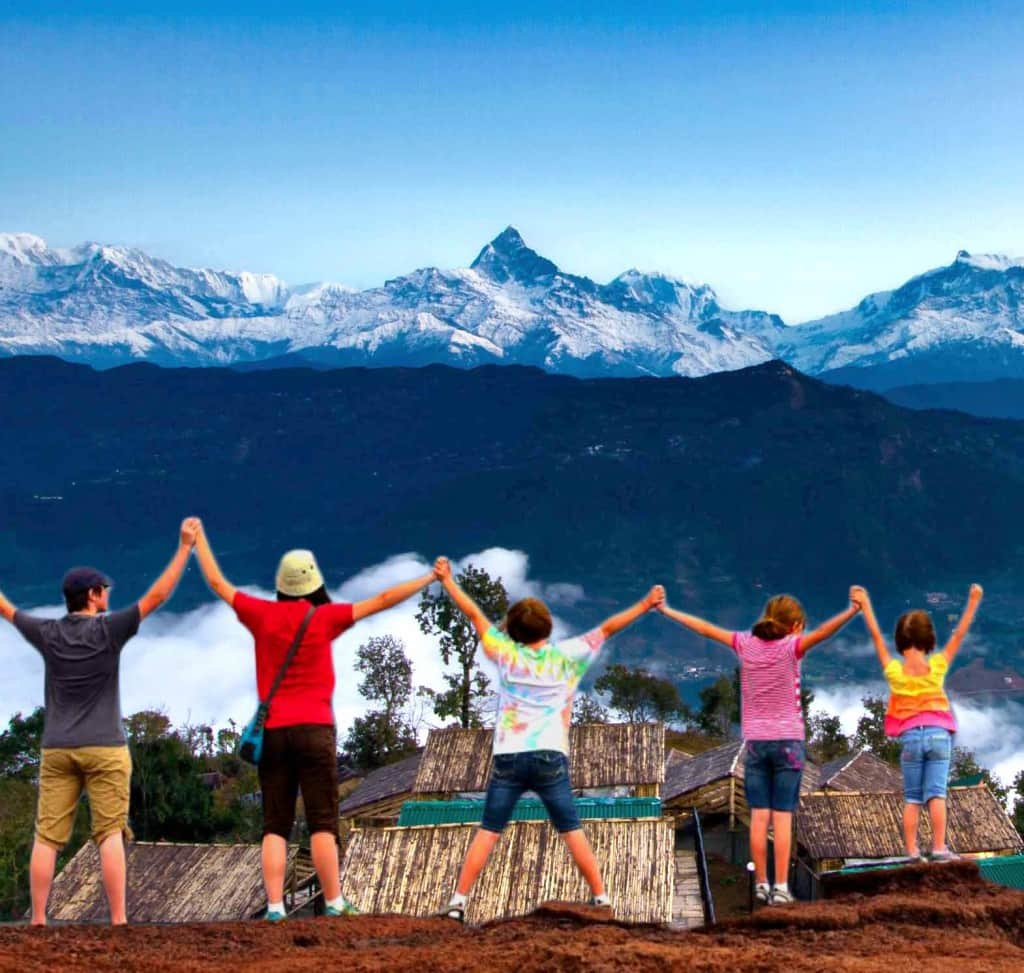
Destination
Nepal Tour
Duration
10 days and 9 nights
Difficulty
Moderate
Max. Elevation
N/A
Group Size
N/A
Accommodation
Standard Options
Vehicles
N/A
Food
No bed or meals included
Families may enjoy a great blend of culture, nature, and adventure in Nepal. The first stop on this 10-day journey is Kathmandu, the busy capital of the country. From there,
travelers may explore the Kathmandu Valley's rich history and spirituality. Swayambhunath (Monkey Temple), Pashupatinath Temple, and Boudhanath Stupa are
famous places that highlight how Nepal's Hindu and Buddhist traditions mix. Families may see how these ceremonies and buildings have been done for hundreds of years.
The trip goes up to Nagarkot, a peaceful hill station known for its vistas of the Himalayan peaks at sunrise, including Mt. Everest on clear days. The trip next goes
south to Chitwan National Park, a UNESCO World Heritage Site.
There, the family can have fun with animals by going on elephant or jeep safaris, canoeing on the Rapti River,
birdwatching, and visiting the Tharu villages and the elephant breeding center. For those who want adventure, white-water rafting on the Trishuli River is an option.
The excursion ends at Pokhara, a beautiful city on the shore of a lake surrounded by the Annapurna and Machhapuchhre (Fishtail) mountains. Families can visit Phewa
Lake, Davis Falls, and the World Peace Pagoda, and they can also see the sunrise from Sarangkot. You may take a beautiful flight back to Kathmandu and then do an Everest
tour, which provides you with a bird's-eye perspective of the tallest peaks in the world. This trip to Nepal will be a lot of fun for your family because it includes culture,
adventure, relaxation, and nature.
- Kathmandu Cultural Tour: On a cultural tour of Kathmandu, you can see UNESCO World Heritage Sites like Swayambhunath, Pashupatinath, Boudhanath, and Kathmandu Durbar Square.
- Nagarkot Sunrise and Himalayan Views: See the sun rise over the Himalayas, with Mt. Everest in the distance.
- Chitwan National Park Safari: You may go on a jeep or elephant safari, canoe, see wildlife, and learn about Tharu culture at Chitwan National Park.
- Pokhara Attractions: In Pokhara, you may enjoy a boat ride on Phewa Lake, see Davis Falls, explore Gupteshwor Cave, and go to Bindhyabasini Temple, the World Peace Pagoda, and the Sarangkot dawn viewpoint.
- Adventure Activities (Optional): You can go rafting, paragliding, zip-lining, or mountain biking if you want to.
- Everest Scenic Flight: A flight over Mount Everest and the Himalayas.
- Relaxation & Leisure: Walking by the lake, going to the spa, and shopping are all enjoyable ways to unwind.
The tour starts in Kathmandu, where you will be led to see its spiritual and historical sites. Then, you can take a beautiful drive to Nagarkot to view the sunrise over the
Himalayas. From there, people can go to Chitwan National Park, where they can go on wildlife adventures, see Tharu traditional performances, and even go river rafting if they want to.
After Chitwan, the trip continues to Pokhara, where the family may enjoy views of the lakes, mountains, and more adventure sports. The Everest Scenic Flight is a beautiful
way to fly back to Kathmandu and is a terrific way to end a trip that encompasses culture, adventure, and relaxation.
- Day01Day 1: Getting to Kathmandu:
When you land at Tribhuvan International Airport in Kathmandu, you will go through immigration and get your visa. Then, your guide will help you get to the accommodation without any problems. Once you reach there, spend a relaxing night at the hotel getting used to Nepal's culture and time zone. Today is an excellent day to relax, get some sleep, and get ready for the next excursion.
- Day02Day 2: Go to Kathmandu and then drive to Nagarkot
Start with a guided tour of the most famous UNESCO World Heritage Sites in Kathmandu. Swayambhunath (Monkey Temple) is a great place to see the city and feel
spiritual at the same time. The Pashupatinath Temple is the most famous Hindu temple in Nepal. Along the Bagmati River, you could watch traditional festivities. The
Boudhanath Stupa is the hub of Tibetan Buddhist culture. At the end of the day, walk through Kathmandu Durbar Square to see the Kumari (Living Goddess) Palace and
other old palaces and temples. In the afternoon, drive to Nagarkot, a quiet hill station that is 2,175 meters above sea level.You can view the beautiful Himalayas, including Mount Everest, when the sun goes down on clear days. - Day03Day 3: : Drive from Kathmandu to Chitwan (optional rafting):
Wake up early to watch the gorgeous dawn over the Himalayas from Nagarkot. Go to Chitwan National Park after breakfast. You will pass through Kathmandu and the
gorgeous countryside. People who want to have fun can go white-water rafting on the Trishuli River. The rapids are easy to cross, and the view of the mountains from there is amazing. When you arrive at your forest lodge in Chitwan, take some time to relax before heading to witness a Tharu tribal dance display that night. This will help you understand how the Tharu people live. - Day04Day 4: A full day of jungle safari in Chitwan:
At Chitwan National Park, you may observe elephants, crocodiles, one-horned rhinoceroses, Bengal tigers, and more than 500 other bird species. Start your trip with a
jeep or elephant safari to observe some strange animals in their natural habitat. You may see gharials and waterfowl by taking a boat down the Rapti River. Take a guided walk into the rainforest to see the plants and birds up close. Then, go to a Tharu hamlet to learn about their history, culture, and way of living that is in harmony with nature. At night, go back to the resort to sleep in the bush. - Day05Day 5: Drive to Pokhara
Go to Pokhara, the "City of Lakes," after you leave Chitwan. The road will take you over rivers, across valleys, and past beautiful villages. Arrive in Pokhara and settle into your accommodation. You can spend the afternoon walking about Phewa Lake or going to the local market to buy handicrafts, souvenirs, and other things that are typical of Nepal. Take your time and appreciate the peaceful lakeside at night.
- Day06Day 6:Visiting the sites of Pokhara
Get up early and head to Sarangkot (1,600m) to view the sunrise over the Annapurna and Dhaulagiri peaks. This is one of the most beautiful views in Nepal. Davis Falls is a beautiful underground cascade. The Gupteshwor Cave, which is adjacent, has a revered Shiva shrine inside it. The Bindhyabasini Temple is a famous Hindu site with a view of Pokhara. After that, head to the World Peace Pagoda, which has great views of the city, Phewa Lake, and the mountains that surround it. Finish the day with a lovely boat ride around Phewa Lake. You can stop at the Tal Barahi Temple, which is on an island.
- Day07Day 7: Free Day in Pokhara
On this free day in Pokhara, you can do exciting things or just relax. You can unwind by walking around the lakeside, going to the spa, or shopping for local handicrafts at the Lakeside Market. You may go paragliding over Pokhara, zip-lining from Sarangkot, bungee jumping over stunning landscapes, or mountain biking on roads that aren't on the road. Families can choose to relax, learn about other cultures, or do things that make their hearts race on this day.
- Day08Day 8: Scenic Flight to Kathmandu
In the morning, enjoy a lovely flight back to Kathmandu. The flight will take about 25 minutes and give you a bird's-eye view of the rivers, valleys, and mountains in
Annapurna and Langtang. The flight will take about 25 minutes and give you a bird's-eye view of the valleys, rivers, and mountains in Annapurna and Langtang. When
you get there, check into your hotel and spend the day relaxing in Kathmandu. You can also visit Patan or Bhaktapur Durbar Squares, take a Nepali culinary class, or walk through the peaceful Garden of Dreams. You can either stay in your hotel and rest or go out to supper in Kathmandu at night. - Day09Day 9: Everest Scenic Flight & Free Day
Begin your day with a spectacular Everest Scenic Flight. You can see Mount Everest (8,848.86m), Lhotse, Makalu, Cho Oyu, and other big mountains in the Himalayas from the air. You will get a certificate to remember the trip, and everyone will get a seat by the window. You can do anything you like in Kathmandu for the rest of the day, including going back to the temples or marketplaces or just relaxing. Have a traditional Nepali dinner and a dance show to say goodbye at the end of the night.
- Day10Day 10: Departure
After breakfast, go to Tribhuwan International Airport for your future adventure. You will always remember your family, culture, the places you went, and the things you did in Nepal.
- Private airport transfers and comfortable family-friendly transportation
- 4–5 star hotel accommodation in major cities
- Guided sightseeing tours with a professional, family-friendly guide
- Daily breakfast at hotels
- All entry fees to monuments and cultural sites
- All government taxes and service charges
- Full assistance throughout the tour
- International airfare and Nepal visa fees
- Personal expenses and extra beverages
- Travel insurance (recommended)
- Lunch and dinner (unless specified in itinerary)
- Tips for the guide and driver
A trip to Nepal with your family will be exciting, but there are some crucial things you should know to make sure everything goes well, is safe, and is fun. This book provides
all the critical information you need for your 10-day trip, such as flights, visas, health and safety, local customs, and helpful travel tips.
Flight Information
You are responsible for making your own international flights to and from Kathmandu. When you arrive at Tribhuwan International Airport, someone will accompany you to
your accommodation. The schedule includes already planned internal flights, including the one from Kathmandu to Pokhara, so your journey will run well. You get to
Kathmandu on the first day and leave after breakfast on the last day.
Nepal Visa Information
Most people who want to go to Nepal require a visa to get in. They can receive one at the airport when they arrive. You need to bring a valid passport, photos that are the
same size as a passport, and the visa fee. You can receive a tourist visa that lasts 15, 30, or 90 days. You can also apply online before you leave to make sure your
application is processed fast. Check the most recent requirements before you go.
Travel insurance
You need travel insurance that covers things like canceling your vacation, becoming sick, and doing exciting activities like paragliding or rafting. Take a copy of your policy
with you on the tour to feel better.
Fitness and Health
This trip is suitable for persons who are in good shape. Every day, you can go sightseeing, take short walks, go on boat trips, or go on safaris. There are tiny
fluctuations in height, but they're not hard to deal with. Talk to your doctor about any health problems you may have, drink enough water, and get enough sleep before you
leave.
Weather Conditions
The weather in Nepal is different in different locations and at different times of the year. In the spring (March to May) and fall (September to November), the weather is usually beautiful and the skies are clear. In Kathmandu and Pokhara, the temperature is normally between 15 and 25 degrees Celsius. It could be warmer in Chitwan. It can be hard to travel during the monsoon season (June to August) when it rains a lot. For the frigid mornings and evenings, bring clothing and a light jacket.
Cultural Considerations
There are many religions and civilizations in Nepal. Cover your shoulders and knees when you go to a temple. When you go to a holy location, take off your shoes. Everyone
values civility, so say "Namaste" to everyone you encounter and always ask before snapping pictures of people, especially in rural areas.
Tipping Guidelines
It's normal to tip, but you don't have to. In restaurants, it's common to leave a tip of 10 to 15 per cent if service isn't included. Most of the time, hotel workers get NPR 100–200 a day, guides get NPR 500–1000 a day, and drivers earn NPR 300–500 a day.
Safety and Security
Be careful, though, because Nepal is largely safe. Don't go out at night by yourself, keep your valuables safe, and listen to your guide, especially if you're on a safari or
doing anything exciting.
Currency and Money Matters
Nepal's money is the Nepalese Rupee (NPR). Big cities have banks, ATMs, and places to shift money. But you should have enough cash on hand in case you go somewhere
far away. You can use a credit card at hotels and big restaurants, but it's better to pay cash for small things.
Transportation
People get around by automobile and by domestic plane. Always wear your seatbelt because mountain roads can be curvy. If you don't have to, don't utilize public transit.
Charging and Power Nepal uses 230 V, 50 Hz power and has Type C, D, and M plugs. Because there may be power outages in remote locations, you should bring a universal adapter and a power bank.
Holidays and Festivals in the Public
Dashain, Tihar, and Holi are important holidays that can disrupt how things function for tourists and services. Make plans ahead of time because some places may be closed on holidays.
Eating and Drinking
Nepalese dishes include dal bhat, momo, and sel roti. Only dine at well-known eateries and drink bottled water to avoid stomach troubles. There are a number of choices for
vegetarians and vegans.
Festivals and Public Holidays
The weather, especially during the monsoon, could make changes to the schedule. If it's practicable, other plans will be made accessible. Before you book, make sure you know the cancellation policy to prevent unnecessary penalties.
Language and Communication
Nepali is the official language, but English is widely spoken in places where tourists go. Cities have adequate cell phone coverage, while rural locations might lack. Most hotels provide Wi-Fi, and SIM cards for your phone are affordable.
Local Customs and Etiquette
Know about other cultures: say "Namaste," respect your elders, don't point your foot at people or religious idols, and obey the norms of civility when you shake hands or go to temples.
Give us a review
Pricing
Number of people
Price per person