




Destination
Everest Tour and Trek
Duration
17 days and 16 nights
Difficulty
Challenging
Max. Elevation
5143 m
Group Size
Max. 10 pax
Accommodation
Standard Options
Vehicles
N/A
Food
Bed included, includes: No meals included
The Kanchenjunga North Base Camp Trek is a great way to explore the eastern Himalayas of Nepal, which haven't been explored before. Trekkers can see the amazing north face of Kanchenjunga, the world's third-highest mountain (8,586 m). This walk takes you through the rural valleys, remote villages, and untouched forests that show you what life was like for the Limbu, Rai, and Tibetan people in the past. If you want to go on a trek that isn't very well known and see the beautiful Himalayan mountains, this is the right choice.
Beginning in Taplejung, and following a scenic flight from Kathmandu to Bhadrapur, trekkers will climb at a slow pace through beautiful villages, rhododendron forests, bamboo, and alpine meadows. There are also highlights such as spotting rare wildlife, including red pandas, musk deer, and Himalayan black bears, as well as the culturally enriched Kanchenjunga Conservation Area. The adventure is a combination of the excitement of high-altitude exploration and the serenity of untouched nature during the trek.
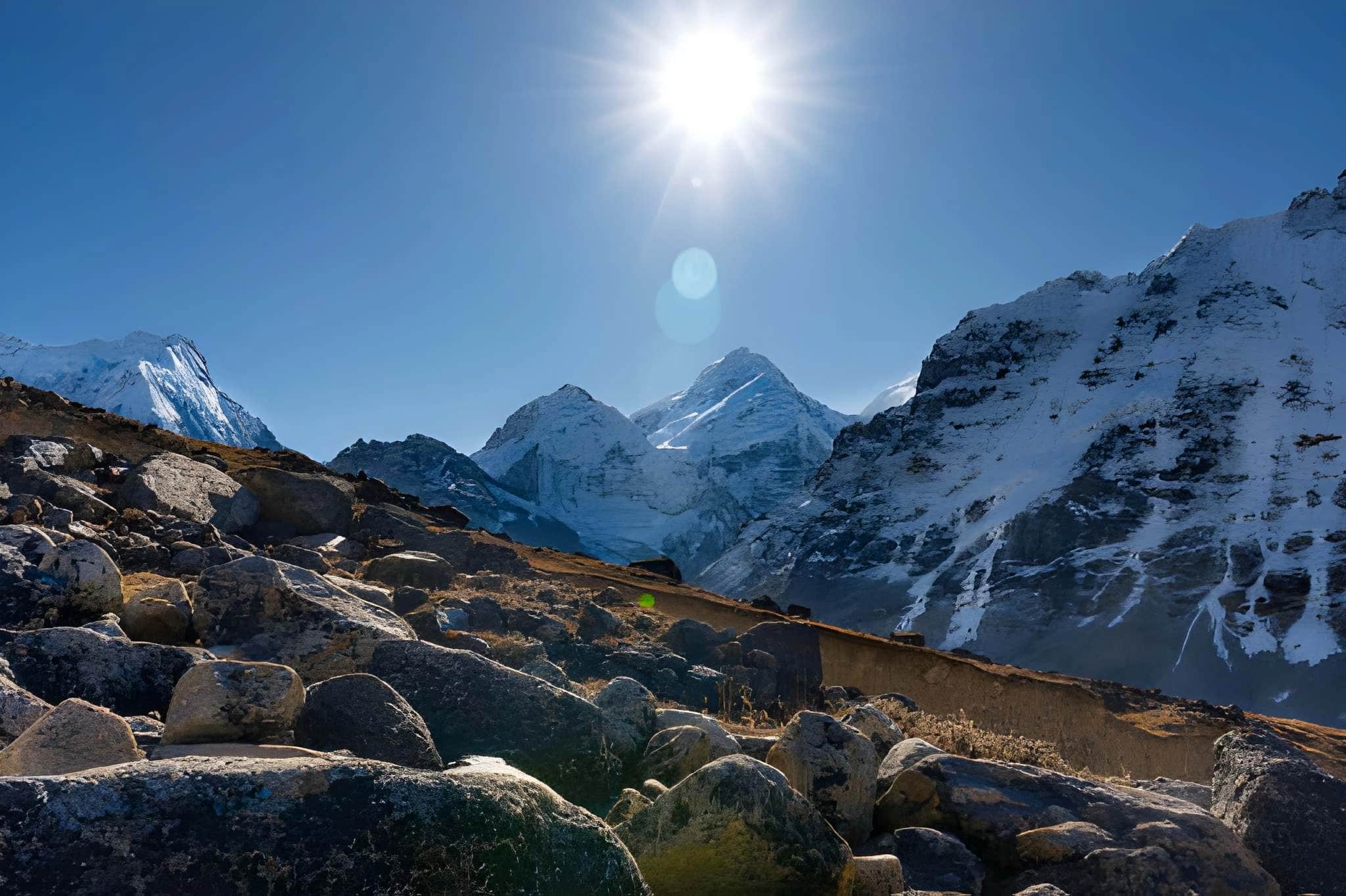
The Kanchenjunga North Base Camp at Pangpema (5,143 m) is the reward that offers the trekker an unmatched sightseeing experience of more than 16 Himalayan mountains, including Jannu, Kirat Chuli, Ramtang, and Makalu. After visiting the base camp, the trek continues through villages and valleys, culminating in a picturesque flight to Kathmandu. This 18-day trip strikes a balance between physical activity, cultural immersion, and nature, offering an experience that will never be forgotten, as it is a Himalayan adventure.
- Majestic mountains of Makalu, Kumbhakarna, and Kanchenjunga I, II, and III are some of the most beautiful sceneries to witness.
- Explore the rituals and traditions of the Tibetan, Limbu, and Rai people who are still in existence today.
- Look out of the unusual wildlife like the pheasants, Himalayan black bears, musk deer, and red pandas.
- Excursion of inaccessible high alpine meadows, glaciers, suspension bridges, and rock paths.
- Explore local food, fly over picturesque mountains, and spend the night in a tea house.
The trip starts with a spectacular flight from Kathmandu to Bhadrapur, then by jeep to Taplejung. Here, trekkers slowly enter the Kanchenjunga Conservation Area through Sekathum, Amjilosa, Gyabla, Ghunsa, Khambachen, and Lhonak. The road winds its way through dense forests, yak pastures, alpine meadows, and glacial valleys, offering all-time panoramic views of high mountains and exceptional biodiversity.
This pathway ends at the Kanchenjunga North Base Camp (Pangpema), and then the trail follows the same way back to Taplejung through the villages and valleys. En route, the trekkers take acclimatisation breaks, engage in cultural interactions, and experience the excitement of wilderness trekking in remote areas. The trip concludes with a picturesque flight from Bhadrapur to Kathmandu, offering a final aerial view of the rugged Himalayan terrain of eastern Nepal.
- Day01Day 1: Arrival in Kathmandu
Arrive at Tribhuvan International Airport, Kathmandu, and will be transferred to the Thamel hotel. Spend this day to be able to relax and walking around the colourful streets, local markets, and cafes. During the evening, meet your trekking guide to discuss the trek plan and prepare for a successful trek. Lodging in a 3-star hotel at 1400 m.
- Day02Day 2: Preparation in Kathmandu, Final Preparation
One day to pack your trekking gear, stock up, and settle into the hectic urban life. It is a great opportunity to relax, savour local dishes, take a brief walking tour of the city, and then head to the mountains. One-night stay at the same hotel.
- Day03Day 3: Flight to Bhadrapur and Drive to Taplejung
Take an early flight to Bhadrapur and then take a scenic 12-hour ride to Taplejung, the land of tea estates, rolling hills and varied terrain. Observe how the area changes slowly into hilly terrain that is not tropical in nature. Upon arrival, check into a tea house and spend the night there at 1,820 m.
- Day04Day 4: Taplejung to Sekathum
Travel beside the Tamor River, passing through the countryside and several suspension bridges to arrive in Sekathum (5 hours, 31 km). The trip presents the scenic natural environment of eastern Nepal and the friendly reception of the local people. Overnight stay at 1,750 m.
- Day05Day 5: Sekathum to Amjilosa
Hike 7 km in 5- 6 hours through steep slopes and through the Ghunsa Khola through suspension bridges. Pass yak fields and have the most spectacular mountainous panoramas on your way up the mountain in a gentle but steady way, slowly getting into the high-altitude zone. Overnight stay at 2,308 m.
- Day06Day 6: Amjilosa to Gyabla
An 8-km walk of 5 hours in thick rhododendron woods and oak forests, falls, and hamlets. Witness the grazing of yaks, flying eagles, and wild animals at times. The path provides a peaceful introduction to the world of alpine scenery. Overnight stay at 2,730 m.
- Day07Day 7: Gyabla to Ghunsa
Hike 10km/5hours through the Tibetan village of Phole and ascend the mountain to Ghunsa. Get picturesque landscapes of snow-topped mountains and alpine fields, an insight into the local way of life and culture. Overnight stay at 3,595 m.
- Day08Day 8: Ghunsa Acclimatisation
Sleep and acclimate to the high altitude. Hike along the local trails, pay a visit to the local gompa, and enjoy the clean and unpolluted alpine environment. This day makes your body ready for greater heights in the future. Overnight stay at 3,595 m.
- Day09Day 9: Ghunsa to Khambachen
Walk 10km in 5-6hours up to the upper glacial valleys. The landscape is changed into the frost-brown habitat of the alpine mountains, and the grandiose Jannu mountain rises in the background. It is not an easy but a great part that has stunning views. Overnight stay at 4,050 m.
- Day10Day 10: Khambachen Acclimatisation
The second day of acclimatisation is of great importance to the achievement of the base camp. Side trips to the adjacent ridges or vistas are optional and provide a view of the entire mountain. Overnight stay at 4,050 m.
- Day11Day 11: Khambachen to Lhonak
Walk 9 km in 4-5 hours towards the core of the Kanchenjunga massif. Cross snow-fed falls, plateau grasslands, and observe wildlife, including blue sheep. It is a slow ascent to the foot of the Kanchenjunga glacier, and the panoramic views are extensive. Overnight stay at 4,780 m.
- Day12Day 12: Kanchenjunga North Base Camp
Trek to North Base Camp at 5,143 m to Lhonak and back to Lhonak, or spend a night at the base camp in case of favourable weather. Gradually ascend to Pangpema, have lunch, and go to the base camp. See snow-crowned mountains, waving prayer flags, and celebrate the accomplishment of the final purpose of your hike. Overnight stay at 4,780 m.
- Day13Day 13: Lhonak to Khambachen
Begin the descent, retracing the route back through glacial valleys. The downhill walk is easier, allowing you to appreciate the scenery from a new perspective. Overnight in Khambachen.
- Day14Day 14: Khambachen to Ghunsa
Continue descending toward Ghunsa. Forests slowly reappear, and oxygen levels improve, making the walk more comfortable. Enjoy the warmth of the village atmosphere once again. Overnight in Ghunsa.
- Day15Day 15: Ghunsa to Amjilosa
Descend through alpine forests, streams, and ridges. The route passes familiar villages and landscapes, giving time to reflect on the journey. Overnight stay at Amjilosa.
- Day16Day 16: Amjilosa to Sekathum
A pleasant downhill trek through bamboo forests and river valleys. The trail gradually becomes easier as you move away from high altitudes. Overnight stay in Sekathum.
- Day17Day 17: Drive from Sekathum to Taplejung
Conclude the trekking portion and drive back to Taplejung. Enjoy final views of eastern Nepal’s hills and rural life. Overnight in Taplejung.
- Day18Day 18: Drive from Taplejung to Bhadrapur
A long scenic drive back to Bhadrapur, passing through diverse landscapes from hills to lowlands. Overnight stay near the airport.
- Day19Day 19: Fly Bhadrapur to Kathmandu & Departure
Fly back to Kathmandu with scenic views of Nepal’s varied terrain. Transfer to your hotel or connect with your onward international flight, marking the end of an unforgettable Kanchenjunga North Base Camp adventure.
- Private airport transfers and luxury ground transportation in Kathmandu
- 4–5 star hotel accommodation in Kathmandu
- Domestic transport and logistics as per the itinerary
- Premium teahouse/lodge accommodation during the trek
- Experienced licensed trekking guide and dedicated porter service
- All meals during the trek and daily breakfast in Kathmandu
- Restricted area permits, national park fees, and government taxes
- First-aid support and full trip assistance throughout the journey
- International airfare and Nepal visa fees
- Personal expenses and extra beverages
- Travel insurance (mandatory for remote trekking, including evacuation)
- Tips for the guide and porter
- Optional activities not mentioned in the itinerary
The best time to visit Kanchenjunga North Base Camp is during spring (March–May) and autumn (September–November). Spring offers blooming rhododendron forests, stable weather, and clear mountain views, while autumn provides crisp air, minimal rainfall, and excellent visibility of the Kanchenjunga massif. The monsoon season (June–August) brings heavy rain and landslides, making trails unsafe, and winter (December–February) can be extremely cold with heavy snowfall at higher elevations. For safe trekking and the best scenery, spring and autumn are highly recommended.
The best time to visit Kanchenjunga North Base Camp is during spring (March–May) and autumn (September–November). Spring offers blooming rhododendron forests, stable weather, and clear mountain views, while autumn provides crisp air, minimal rainfall, and excellent visibility of the Kanchenjunga massif. The monsoon season (June–August) brings heavy rain and landslides, making trails unsafe, and winter (December–February) can be extremely cold with heavy snowfall at higher elevations. For safe trekking and the best scenery, spring and autumn are highly recommended.
Kanchenjunga North Base Camp Trek is probably one of the most remote and least known trekking expeditions in Nepal and offers the best views of the third-highest mountain in the world. The hike is ideal for those seeking an off-the-beaten-path adventure, combining rugged terrain, untouched forests, ice landscapes, and isolated hamlets.
This is not a place where one can simply wander around; it requires good fitness, proper acclimatisation, and careful planning, but the payoffs are spectacular natural landscapes, a chance to interact with other unique cultures, and the sense of isolation in a place free from tourists.
Best Time to Trek
Spring (March-May) and autumn (September-November) are the best seasons to do trekking. During the spring, rhododendrons and magnolias are in bloom, and the landscapes are vibrant with the pleasant weather and clear skies, making trekking a comfortable experience.
Autumn offers good weather, cool air, and wonderful visibility of the mountains, making it the perfect time to take pictures and capture long-distance shots. The monsoon rains are also characterised by heavy rains, muddy trails, and the possibility of landslides, whereas the winter seasons are characterised by snow, icy roads, and very low temperatures; trekking is very risky without experience living at high altitudes. These are the best seasons to plan around, as they are safe and will help maximise the scenic experience.
Permits and Documentation
Visiting the Kanchenjunga North Base Camp requires a Kanchenjunga Conservation Area Permit (KCAP) and a Restricted Area Permit (RAP) for certain areas, as well as a TIMS card for all visitors. because the trek will run through such conservation areas. When doing the permit, it is important to bring your passport, copies and passport photos.
Accommodation
Accommodations on the Kanchenjunga North Base Camp Trek are primarily tea houses and lodges, offering basic beds, shared amenities, and minimal heating. Hot showers are provided by some lodges at lower altitudes at a small premium, although electricity supply is often supplied only over a short period, sometimes delivered through solar panels. Lodges situated at higher altitudes may be simpler, and trekkers will be forced to use sleeping bags with -20 °C ratings and personal equipment as a source of warmth. A prior reservation is recommended during the high trekking season. In remote locations with limited amenities, it is advisable to carry a headlamp and personal toiletries.
Food and Water
You will find food on the trail delicious and plentiful. Traditional Nepali dishes, such as Dal Bhat with unlimited refills, fried rice, noodles, Momo dumplings, and Thukpa noodle soup, can be enjoyed, as well as Western meals like pasta, pizza, burgers, and potatoes. Breakfast choices include Tibetan bread and chapatti with curry to eggs, porridge, muesli and pancakes. The trek will be vegetarian, and vegan options are available. If you have special dietary needs, please communicate them to your guide. Included in your package are dinner in Kathmandu before starting the trek and three meals per day on the trail, including tea or coffee, with additional snacks, desserts, or other special drinks available to purchase.
Physical Preparation and Training.
This trek requires a high degree of fitness. Trekkers need to train in cardiovascular exercises, stair climbing, hiking, and leg strength training to ensure they are ready to face long daily ascents and descents. It is essential to be properly acclimatised, and the number of rest days suggested should be increased for Ghunsa and Khambachen to minimise the chances of altitude sickness. Climbing high and sleeping low is a principle that makes the body adjust. It is advisable to carry a simple first aid kit and any personal medication, and consult a doctor about preventive measures for altitude sickness, particularly for trekkers who are vulnerable to high-altitude problems.
Packing Essentials
This is necessary to be well geared. Layered and water-resistant jackets, trekking shoes, gloves, hats, sunglasses, sunscreen, sleeping bag. A day pack with water, snacks, and personal items, along with a small first aid kit, is essential even in the best season for trekking. The other products, including a headlamp, trekking map, and power bank, could be handy in remote locations where power supplies are limited.
Communication and Connections.
Coverage with mobile networks is poor and patchy at elevated levels, and Ncell and Nepal Telecom provide intermittent coverage. A small number of lodges have Wi-Fi, which is usually ineffective and expensive. The trekkers are also recommended to have a satellite phone or a GPS device in case of an emergency, and to ensure that they communicate with the guides or local contacts as frequently as possible. It is also important to be prepared for periods of minimal connectivity, particularly during emergencies or unforeseen weather conditions.
Safety and Environmental Information.
Trekkers are expected to preserve wildlife and local ecosystems. Animals such as yaks, blue sheep, and Himalayan black bears are also found along the route, and they should be viewed from a safe distance. The local practices and traditions must be observed, such as dressing modestly and seeking permission before taking pictures of villagers. It is necessary to recycle garbage, consume environmentally friendly products, and minimise the impact on the environment to conserve it. Awareness of altitude sickness is essential, and trekkers must descend the moment they experience severe symptoms, according to guidelines provided by the guide or medical advice.
Cultural Insights
The route passes through Limbu and Rai, as well as Tibetan villages, which expose individuals to the unique language, dress, and practices. Trekkers can also visit small monasteries (gompas) to learn about Buddhist rituals, prayer flags, and meditation. Local festivals are also observed on the occasion of the trek, giving one a glimpse of the traditional music, dance and religious rites, which add to the cultural enrichment experience of the trek in addition to the natural beauty of the mountains.
Give us a review
Pricing
Number of people
Price per person