




Destination
Everest Tour and Trek
Duration
4 days and 3 nights
Difficulty
Moderate
Max. Elevation
N/A
Group Size
N/A
Accommodation
Standard Options
Vehicles
N/A
Food
Only includes meals, No bed: No meals included
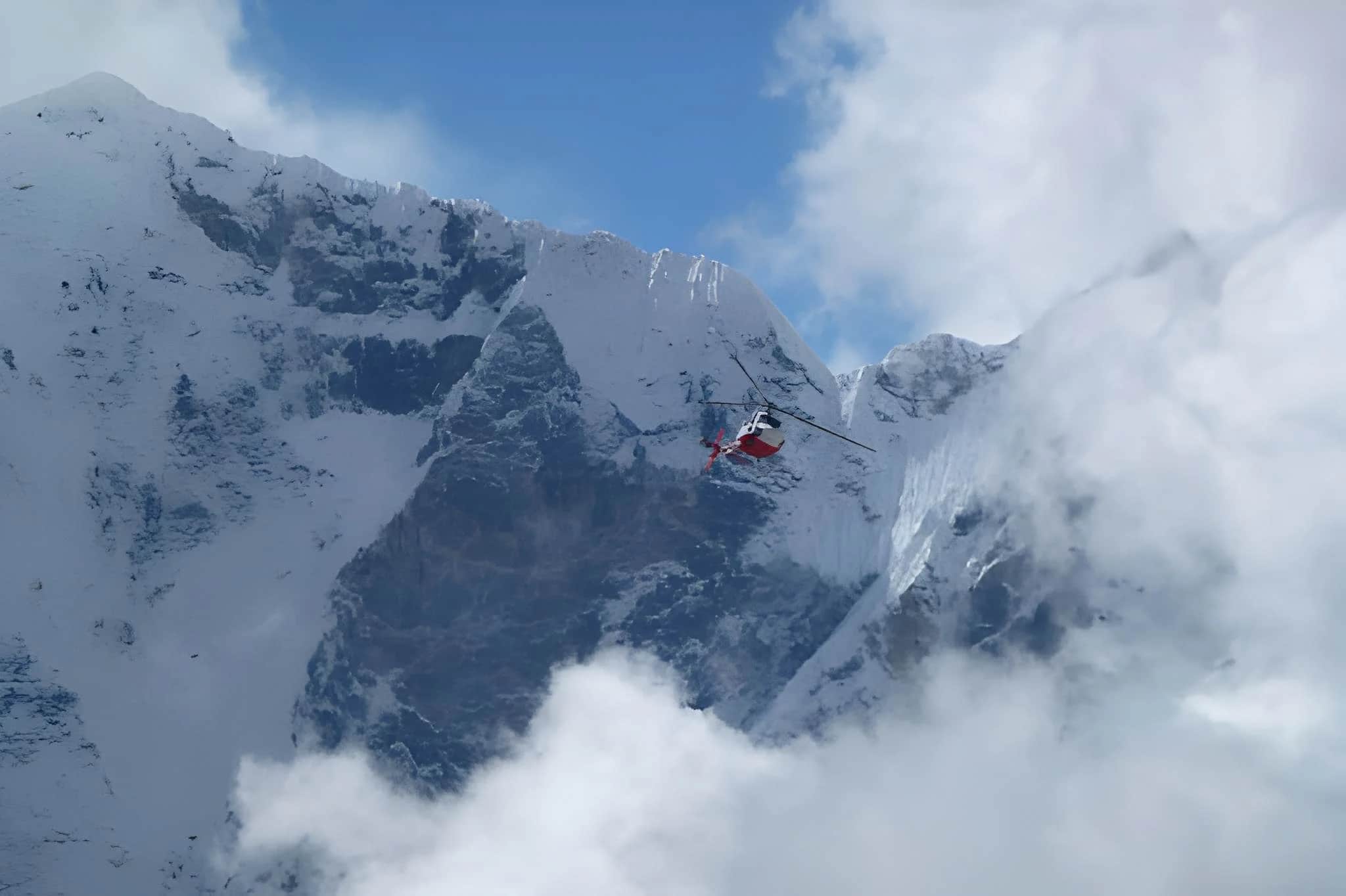
The Everest Helicopter and Kathmandu Tour is the ultimate adventure, the pinnacle of luxury, a 4-day journey that will make Nepal's natural grandeur and cultural richness come true. The adventure starts with a thrilling helicopter journey to the highest mountainous area in the world, Mount Everest. Fly over the beautiful Khumbu Valley, stop at the famous Everest Base Camp and land on the famous Everest View Hotel, and you have breakfast with the Himalayas in front of you. This guided flying tour gives one the front-seat view of one of the most breathtaking scenes on the planet.
Outside the mountains, this itinerary glorifies the spirit of Nepal in the Kathmandu Valley. You will visit such UNESCO World Heritage locations as Swayambhunath, Boudhanath, and Pashupatinath, which will allow you to plunge into the spiritual nature of the country and ancient art. Every place of interest offers the complex juxtaposition of Buddhism and Hinduism that is the cultural environment of Nepal, and the personal guided tours will guarantee you experience and a sense of place during your journey.
The gateway to the great Himalayas will end with a peaceful hill station of Nagarkot, where you will have a view of a sunrise that makes the entire range of the Himalayas appear in shades of gold and crimson. Each aspect, such as handpicked luxury rooms and suites, flawless personal transfer and dining service, is carefully planned to provide the highest level of sophistication that combines adventurous, cultural, and lavish experiences.
- Everest Helicopter Tour with Landing: Fly around the Himalayas, above the Everest Base Camp and the Kala Patthar and have breakfast at the Everest View Hotel in Syangboche.
- Luxury Accommodation: Accommodate in the best 4 and 5-star hotels like Hotel Dwarika, Hotel Marriott Kathmandu or Nagarkot Resort to experience the ultimate comfort.
- Kathmandu Heritage Tour: Explore UNESCO sites in Kathmandu Valley,
- Kathmandu Sightseeing: Explore Kathmandu Valley with a professional local guide.
- Nagarkot Sunrise Experience: See the sun rise over the snow-capped peaks such as Mount Everest, across a quiet hillside hideout.
- Privatization and Smooth Service: You will be able to have a taste of your own medicine as you have the chance to ride in privately owned luxury cars, get customized services and say your goodbyes to Kathmandu with a cultural dinner.
The Luxury Everest Escape starts in Kathmandu, the capital city, where the adventure on the helicopters is initiated with a helicopter flight to the Everest region. Fly over the Khumbu Valley, fly over the glaciers of the Everest Base Camp, and get panoramic views of the highest mountains in the world. Your helicopter will come to Syangboche hill, where there is the Everest View hotel, where you will have breakfast in the presence of the Himalayan skyline.
After returning to Kathmandu, the path is changed into a cultural and scenic experience. Tour old temples, royal courts and colorful Buddhist stupas of the valley and then drive to Nagarkot to have a peaceful end. This hill station is also the perfect place to have a memorable sunrise, considering that it is situated at 2,175 meters overlooking the Himalayas. This is a short but luxurious pathway that guarantees a remarkable ratio of adventure in the high altitude and calmness.
- Day01Day 01: Arrival and Kathmandu Pre-Trip Meeting.
On arrival at Tribhuvan International Airport, do the visa-on-arrival procedure and pass through immigration. Our representative is going to pick you up and carry your luggage with a personalized placard. Then you will be picked up in a luxury car to your hotel, which can be either The Dwarika, Marriott, or Hotel Mulberry. During the evening, have a briefing about the trip before the trip, and your guide will go through the itinerary with you and make sure everything is in place during the upcoming days.
- Day02Day 02: Everest Helicopter Tour and Kathmandu Back (4 Hours)
Get up early, be transferred to the domestic terminal of Tribhuvan Airport, and start your helicopter adventure. Following a briefing, board your plane to Lukla, where you refuel and then carry on over the grand Khumbu Glacier and Everest Base Camp. Fly over Kala Patthar to have the best possible glimpse of the peak of Mount Everest. You will then arrive at Syangboche Hill to have breakfast in the Everest View Hotel, which is surrounded by the impressive views of the Himalayas. Following your flight back to Kathmandu, spend the afternoon having some leisure time, all the things you can do are visiting a spa, spending time in the pool or go shopping in the boutique shops in Thamel.
- Day03Day 03: Kathmandu Sightseeing and Nagarkot Drive.
Then have breakfast and a guided sightseeing tour of the UNESCO-listed landmarks of Kathmandu Valley. Explore the panoramic view of the city in Swayambhunath Stupa (Monkey Temple), visit the art-filled Patan Durbar Square and experience the spiritual power of Pashupatinath Temple and Boudhanath Stupa. In the afternoon, travel an hour to Nagarkot, where your luxury resort is waiting. Relax with a glass of wine and enjoy the Himalayan viewpoint with the sunset behind the faraway mountains.
- Day04Day 04: Nagarkot Sunrise and departure.
Rise early to see one of the most unbelievable scenes in Nepal, the sunrise on the Himalayas. At sunrises, you can observe Mount Everest shining in the distance. Spend a lazy morning after breakfast and then be transferred to Tribhuvan International Airport to take your onward flight. And this is how the 4-day trip of your lifetime in Nepal's luxury and adventure destinations comes to an end.
- Private airport and hotel transfers in Kathmandu
- Luxury 4–5 star hotel accommodation with breakfast
- Everest scenic helicopter tour with guaranteed window seat
- Guided Kathmandu city tour with a private vehicle
- Experienced guide and pilot briefing
- All necessary permits, government taxes, and service charges
- International airfare and Nepal visa fees
- Entry fees to heritage sites
- Personal expenses and extra beverages
- Travel insurance (recommended)
- Tips for guide and staff
The climate in Nepal is very regionally and altitudinally diverse. The spring (March-May) is full of blooming rhododendrons, clear skies, and moderate temperatures, which are perfect in terms of sightseeing and flying in the mountains. The most comfortable season to do both cultural tours and adventure is in Autumn (September-November) when there are crystal clear views of the Himalayas, pleasant weather, and it is the most popular.
Winter (December-February) is less noisy and is ideal in terms of city tours and luxury accommodation, although at very low temperatures in the mountains. Summer (June -August) is green and wet, but it also carries monsoon rain,s hence restricting flights to Everest or trekking. It is best to plan your trip based on these times so that you can have the most comfortable, the best visibility, and probably the most outdoor activity.
The climate in Nepal is very regionally and altitudinally diverse. The spring (March-May) is full of blooming rhododendrons, clear skies, and moderate temperatures, which are perfect in terms of sightseeing and flying in the mountains. The most comfortable season to do both cultural tours and adventure is in Autumn (September-November) when there are crystal clear views of the Himalayas, pleasant weather, and it is the most popular.
Winter (December-February) is less noisy and is ideal in terms of city tours and luxury accommodation, although at very low temperatures in the mountains. Summer (June -August) is green and wet, but it also carries monsoon rain,s hence restricting flights to Everest or trekking. It is best to plan your trip based on these times so that you can have the most comfortable, the best visibility, and probably the most outdoor activity.
A trip to Nepal, particularly in a luxury trip that incorporates high-altitude activities and cultural excursions, does not come fast. Knowing the local rules and regulations, weather, health requirements, and cultural behaviour will make your stay a hassle-free, safe and enjoyable experience. The section offers the necessary information on what to anticipate and how you prepare prior to your adventure.
Travel Documents and Permits.
Any foreigner travelling to Nepal has to possess a valid passport with not least six months of validity as of the date of entry. Tourist visas may be availed during arrival at the Tribhuvan International Airport or pre-application in a Nepalese embassy. To have a visa on arrival, you require two passport-sized photos and a visa fee in USD ( USD 30 for 15 days, USD 50 for 30 days, USD 125 for 90 days).
In cases where the traveler is going to high altitude sites like Everest, domestic flight tickets or helicopter permits can also be needed. Store a copy of all the significant documents, such as the passport, visa, insurance and flight itineraries in soft and hard copies. These will be used in airports, hotels, and areas of restriction in terms of entry.
Accommodation Standards
The high-end travelers are assured of 4- and 5-star hotels, boutique resorts, and lodges in the mountains, which are equipped with modern facilities. Kathmandu Hotels are known to have good restaurants, spas, and various spa treatments and concierge services. Resorts in the hill stations such as Nagarkot offer a beautiful Himalayan panorama, warm interiors and serene surroundings.
Even the most distant luxury hotels do not compromise on service standards such as clean rooms, good bedding, hot water and friendly staff. The tourists are advised that some mountain lodges might lack connectivity or elaborate services like their counterparts in the city hotels, yet they compensate for this with the stunning scenery and the distinct local experiences.
Transportation and Transfers.
The majority of luxury tours are full of comfort and convenience as they are accompanied by personal transport to the airport and sightseeing. Air travel within the country and by helicopter is the most common method of accessing the high altitude areas like the Everest region. Helicopter flights are time-sensitive and can be postponed or rescheduled because of the weather or the position of the cloud cover, or the wind.
Depending on the road conditions and the traffic, road travel may take some time. Highways to the hill stations or towns can be hilly and zigzag. People are not recommended to carry bags containing important things as they may be needed during road or flight journeys, but they should obey whatever pilots and drivers say about safety.
Health and Safety
Generally, Nepal is safe in terms of traveling, although it is important to be cautious. Bring a simple first-aid kit, motion sickness medication, headache medicine or minor cut medicine. It is recommended that one drink bottled or filtered water to avoid gastrointestinal problems.
Even in a brief helicopter landing at 3,880 meters, high-altitude places like Everest may lead to mild altitude sickness. Keep hydrated, avoid alcohol, and climb where necessary in a gradual manner. Patients with pre-existing heart, lung or blood pressure problems should visit a doctor before travelling. Bring any medications prescribed to you with a prescription filled in.
Altitude Intelligence and Safety Advice.
Even during the short time that helicopter flyers would visit Everest, they would subject the travelers to high altitudes, and some of them would experience lightheadedness, breathlessness, or even slight headaches. It is advisable to:
- Pre-flight hydration and post-flight hydration.
- Shall take time when halting in high places.
- Do not take heavy meals right before helicopter trips.
In case you are prone to altitude sickness, make sure you talk to your doctor about preventative medication like acetazolamide. Never take it upon oneself to walk or climb without guidance or without being acclimatized to it. It is always advisable to follow the instructions given by the flight crew or the guide before doing so.
Money and Currency
The Nepalese currency is the Nepalese Rupee (NPR). Whereas the large hotels, restaurants and shops will accept credit/debit cards, smaller purchases, tips and remote locations will need cash. The ATMs are found in the major cities such as Kathmandu and Pokhara, whereas some rural parts have low access.
What is advised is to always keep small amounts of USD or NPR, which will be easily paid in visa, tips, or small purchases. Do not give money to illegally acquired merchants.
Cultural Etiquette
You should respect the local tradition to improve your tour experience. Common practices include:
- It involves shaking hands during temples or a village when welcoming someone with Namaste.
- Wearing simple clothes, particularly when going to religious places.
- Taking off shoes and hats upon visiting temples or monasteries.
- Seeking the consent of the local population before taking photographs.
- Noticing a silent and reverent demeanor in religious places.
It is customary, though not obligatory, to tip. It is not hard to show some form of appreciation to guides, drivers, and hotel staff members with small gestures.
Connection and Communication.
In luxury hotels, cafes in the city and even in certain mountain lodges, Wi-Fi is common. Nevertheless, there can be limited or disjointed connectivity in remote locations. At the airport or at the city stores, tourists can buy local SIM cards with data plans to have a good mobile signal during their vacation.
Packing Essentials
Package based on destination and season. Essentials include:
- Light market walking shoes and light trekking on uneven surfaces.
- Warm-up dresses to use in hill stations and elevated regions.
- Sunscreen, hat, and sunglasses for the sun.
- Light jacket or fleece when going on early morning helicopter flights or Nagarkot sunrise.
- Photos of the camera or smartphone of mountains, temples, and cultural experiences.
Responsible Travel
Practices to follow include:
- Promoting green hotels and local companies.
- Reduction of single-use plastics.
- Appreciating the local culture, nature, and wildlife.
- Interaction with communities using local guides, artisans and cultural experiences.
Responsible tourism makes sure that the places where you tour will be of value to them and to future tourists as well.
Give us a review
Pricing
Number of people
Price per person