




Destination
Everest Tour and Trek
Duration
19 days and 18 nights
Difficulty
Moderate
Max. Elevation
5000 m
Group Size
N/A
Accommodation
Standard Options
Vehicles
N/A
Food
No bed or meals included
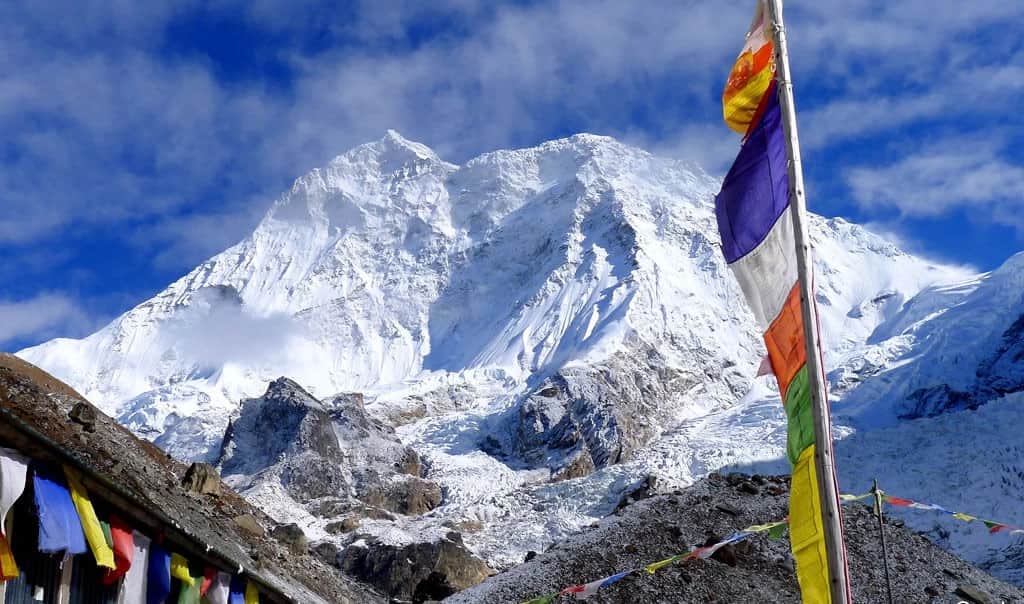
The Makalu Base Camp Trek is a remote and highly rewarding trek in Nepal, where one ventures deep into the heart of the eastern Himalayas. This 19-day trip will lead you through peaceful communities, mossy rhododendron forests, and high alpine pastures before you can be at the feet of the mighty Mt. Makalu (8,481m), which is the fifth-highest mountain in the world.
The Makalu route is also an untouched trail, unlike the busier ones, such as Everest or Annapurna, which provide trekkers with the opportunity to experience the true rural life and the unspoiled beauty of Makalu-Barun National Park. Endangered species, such as the snow leopard and the red panda, can be found in the region, along with a large number of rare flora.
Each of the treks unveils another landscape, ranging from terraced fields of the Arun Valley to breathtaking views of Everest, Lhotse, Baruntse, and Chamlang mountains. If you desire the feeling of being alone, adventure, and magnificent landscapes, the Makalu Base Camp Trek provides a memorable Himalayan experience.
- Close-up view of Mt. Makalu (8,481m)
- Less-crowded and peaceful trails across Makalu-Barun National Park.
- Experiences with exotic wild animals and plants.
- Breathtaking scenery of Everest, Lhotse, Kanchenjunga, and Baruntse.
- Specifics of cultural interaction with the Sherpa and Rai people.
- Hiking through fertile valleys to mountain glaciers.
- Heliborne tour Kathmandu- Tumlingtar.
- An adventure of the Himalayan off-the-beaten-path.
The expedition is initiated by a scenic flight from Kathmandu to Tumlingtar, followed by a drive to Mani Bhanjyang, where the expedition truly begins. The bottom part is a route through terraced agricultural land, subtropical forest, and villages such as Chichila, Num, and Seduwa, providing insight into local culture and village life.
The landscape changes radically as you move up the mountain to Tashi Gaun, Kahuma Danda, and Mumbuk. In the Sherson area, located at the lower base camp of Mt. Makalu, there are Alpine meadows, glacial streams, and pristine forests. This expedition will conclude at Makalu Base Camp (5,000m), where a breathtaking scenery of the Himalayan giants surrounds it. The trip back follows the same path, offering trekkers a second chance to appreciate the serenity and spectacular views of this isolated part of the Himalayas.
- Day01Day 1: Fly Kathmandu to Tumlingtar, Drive to Chichila (1,980m)
You begin your journey with an early morning flight from Kathmandu to Tumlingtar, a small airport in eastern Nepal, offering magnificent views of the Arun River valley and the surrounding hills. Upon arrival, we will take you on a scenic 4-hour drive to Chichila. The trail leads you through an irrigated agricultural field, tiny villages, and well-forested hilly terrain, giving you a picture of what life in Nepal is like in a rural setting. The mountainous roads follow the rivers and gorges, offering panoramic photo opportunities on the route. After arriving in Chichila, sit down and enjoy a cup of tea at one of the local teahouses, have a hot meal, and take a walk around the village to stretch your legs and get accustomed to the surroundings. It is an ideal night to have a rest before the trek gets serious.
- Day02Day 2: Trekking from Chichila to Num (1040m)
The expedition commences with a slow journey towards the valley of the Arun River. The path goes through small Rai villages and their terraced farms, and local agriculture emphasizes the agrarian way of life of the area. You would pass many wooden suspension bridges across clear mountain streams, which not only provide a certain adventure but also offer stunning views.
The path is not very difficult, and it features some gradual inclines. When you cross Num, you will see that the landscape has changed from a lower river valley terrain to a more forested land. Num is a small town in which teahouses serve as the rudimentary accommodations and local dishes. This day will give you time to acclimatize to the trekking routine and spend your first full day living in the Himalayan villages.
- Day03Day 3: Num to Seduwa (1500m)
The walk now is an even, graded ascent up out of the valley to the lower hills of the Makalu district. It is a pleasant walk in the midst of green trees, rhododendrons, pines, and oaks, which is particularly good in the springtime. You will find small streams and bridges, with villagers engaged in their day-to-day activities, making the trip a cultural experience. The trail offers a view of the Himalayan mountains in the distance, and the local homestays in Sajuja are very welcoming. The hiking is neither too slow nor too fast, and there is ample time to take in the landscape and appreciate the people, who are very hospitable to visitors. The evening at Seduwa is calm, and there is just time to rest before the longer ascents that lie ahead.
- Day04Day 4: Seduwa to Tashi Gaon (2100m)
The path now slowly passes upwards through a succession of thick woods and clear skids. You will be surrounded by prayer flags and tiny Buddhist monasteries, and the cultural impact of the Sherpa and Tibetan populations is highly evident in this area. The woods are filled with the sounds of birds, and the scent of pine makes this experience plunge even further into the realm of an immersive experience. Tashi Gaon is located at 2,100 meters and offers teahouse facilities where one can experience local cuisine. It is an active medium trek combined with exposure to the culture, and offers a glimpse of the high Himalayan way of life before the more rigorous climbs commence.
- Day05Day 5: Tashi Gaon to Khongma Danda (3500m)
It is a demanding day with considerable altitude gain before climbing up the mountain to Khongma Danda, departing from Tashi Gaon. It is a path through a thick wood that is slowly replaced by open alpine fields and rocky ridges. You will start to witness the panorama of Makalu, Baruntse, and other mountains, and this is a dream for photographers.
The route will be full of switchbacks and steep uphill climbs, so one will need to be well-endowed. On the other side of Kyoto is Khongma Danda, a site with the bare minimum of teahouses, which will be your initial high-altitude stop to enable trekkers to acclimatize to the lighter air and lower temperatures. The night is perfect when there is a sunset view of the Himalayan mountain ranges.
- Day06Day 6: Rest day at Khongma Danda (3500m)
A day in Khongma Danda allows your body to acclimate to high altitude, which means you may be less susceptible to altitude sickness. Activities include short ups and downs to the neighbouring ridges, where you encounter proximity to the glaciers, peaks, and valleys. Trekkers usually take time to take pictures of the scenery, meditate, or take a nap. Light footing and sightseeing enable your body to acclimatize while allowing you to enjoy the beautiful natural environment. It is also a great day to connect with local guides and other trekkers to learn more about the culture and geography of the Makalu area.
- Day07Day 7: Khongma Danda to Dobato (3500m)
The hike is now moderate, with slight uphill and downhill climbs, which lead to Dobato, located at the same elevation as Khongma Danda. The path traverses an open meadow and rocky landscape, offering magnificent views of Makalu's north face and the surrounding mountain range. Dobato is a small village and a resting point for further acclimatization and an ultimate climb to Base Camp. The hike involves walking through glacial rivers and hilly ridges; therefore, trekking poles are recommended. Sightseeing of the sunsets in the evening over the peaks is a memorable experience at high altitude.
- Day08Day 8: Dobato to Yangla Kharka (3557m)
The journey today is an even climb to the top, through high pastoral meadows which we call kharkas. You will go through a Tibetan kind of settlement decorated with prayer flags and meet yaks grazing on the slopes of the grass. The road is made up of rocky paths and grass, with the trail crossed by streams at various intervals. Yangla Kharka is a place where one can get simple lodges and a tranquil setting to sleep without worrying about the surrounding mountains. In this section, the cultural and natural fusion of the Makalu region is highlighted.
- Day09Day 9: Yangla Kharka to Langmale Kharka (4410m)
Today, the journey becomes more difficult as you enter higher areas of the Alps. It is a rough road, and here and there, covered the snow patches, and through unfenced meadows and glacial moraines. The skyline is dominated by the panoramic views of Makalu, Chamlang, and Baruntse. Langmale Kharka is a remote camp with a few lodges or tents, where people will be fully immersed in the rugged Himalayan nature. Hiking at such heights requires maintaining a balanced pace and hydration to adapt to the thin air.
- Day10Day 10: Trek Langmale Kharka to Makalu Base Camp (4,870m)
Today is the most anticipated day of your trek. The trail climbs gradually over rocky terrain and glacial deposits, with the majestic face of Makalu growing larger with every step. As you approach base camp, the environment becomes stark, dramatic, and overwhelmingly beautiful. Makalu Base Camp sits in a wide glacial basin surrounded by icefalls, hanging glaciers, and iconic Himalayan peaks. After reaching base camp, you settle into the simple teahouses and enjoy the first evening in the heart of the Himalayas.
- Day11Day 11: Explore Makalu Base Camp (4,870m)
Spend a half-day in the Makalu Base Camp and its immediate environment. The peaks, glaciers, and valleys can be viewed at various points of vantage by short climbs to adjacent ridges. It is a participatory experience that gives one an idea of the difficulty of high-altitude trekking and the harsh beauty of the Himalayas. Another good idea is to socialize with guides and other trekkers, share experiences, and take photos.
- Day12Day 12: Trek Makalu Base Camp to Langmale Kharka – 7 hours
Your descent begins today. Retrace your steps along the glacial valley, enjoying easier breathing as you lose altitude. The snow-covered peaks remain in view throughout the journey. An overnight at Langmale Kharka offers a peaceful rest after leaving the high base camp behind.
- Day13Day 13: Trek Langmale Kharka to Yangla Kharka – 6 hours
You continue descending through rocky terrain and wide alpine pastures. The trail returns to greenery, yaks grazing in the distance, and the familiar charm of Yangla Kharka. It is a relaxing day compared to the higher altitudes.
- Day14Day 14: Trek Yangla Kharka to Dobato – 6 hours
Follow the trail back through glacial streams, meadows, and ascending ridges. Dobato’s strategic viewpoint gives you one last magnificent sunset over Makalu’s north face.
- Day15Day 15: Trek Dobato to Khongma Danda – 6 hours
The trail takes you across ridges and through the pristine alpine environment, eventually re-entering forests near Khongma. The return feels easier, with the hardest climbs now behind you. Rest at Khongma Danda.
- Day16Day 16: Trek Khongma Danda to Tashi Gaon – 5 hours
A long descent through rhododendron forests and stone steps takes you back to Tashi Gaon. Re-enter Sherpa villages, prayer wheels, and warm hospitality. Enjoy a peaceful evening in the lower hills.
- Day17Day 17: Trek Tashi Gaon to Seduwa – 4–5 hours
Descend through terraced farmlands, crossing small streams and suspension bridges. The warmer climate and vibrant vegetation feel refreshing after days in the high mountains.
- Day18Day 18: Trek Seduwa to Num, Drive to Chichila and Continue to Tumlingtar – 7 hours
Trek down to the Arun River valley, then ascend gradually back to Num. From here, a scenic drive takes you to Chichila and then onward to Tumlingtar. Celebrate your achievement of reaching one of Nepal’s most remote base camps.
- Day19Day 19: Fly Tumlingtar to Kathmandu – 50 minutes
Early morning flight back to Kathmandu. Enjoy aerial views of the Himalayan ranges, marking a perfect conclusion to your Makalu Base Camp adventure.
- Private airport transfers and luxury ground transportation in Kathmandu
- 4–5 star hotel accommodation in Kathmandu
- Domestic transport and logistics as per the itinerary
- Premium teahouse/lodge accommodation during the trek
- Experienced licensed trekking guide and dedicated porter service
- All meals during the trek and daily breakfast in Kathmandu
- Makalu Barun National Park permits and required trekking permits
- First-aid support and full trip assistance throughout the journey
- International airfare and Nepal visa fees
- Personal expenses and extra beverages
- Travel insurance (mandatory for remote trekking, including emergency evacuation)
- Tips for the guide and porter
- Optional activities not mentioned in the itinerary
The spring (March-May) and fall (September-December) are the most suitable seasons. The spring season has been characterized by fertile valleys, the blooming of rhododendrons, and mild weather conditions. The autumn season has been defined by clear skies, cold air and a sweeping view of the mountains. The rainfall can also make the trails slippery, rivers enlarge, and trails become muddy, hence making it harder and dangerous during the monsoon period (June-August). Winter (December, February) can be unreasonably cold: the snow is falling at even greater heights, and the paths can be closed. Whenever one takes a hike, they can usually be guaranteed safety, visibility, and a great experience, particularly at this time of the year.
The spring (March-May) and fall (September-December) are the most suitable seasons. The spring season has been characterized by fertile valleys, the blooming of rhododendrons, and mild weather conditions. The autumn season has been defined by clear skies, cold air and a sweeping view of the mountains. The rainfall can also make the trails slippery, rivers enlarge, and trails become muddy, hence making it harder and dangerous during the monsoon period (June-August). Winter (December, February) can be unreasonably cold: the snow is falling at even greater heights, and the paths can be closed. Whenever one takes a hike, they can usually be guaranteed safety, visibility, and a great experience, particularly at this time of the year.
Makalu Base Camp Trek is an adventure that can be located at the very center of the eastern Himalayas in Nepal, which could possibly be discussed as an ideal adventure, with the breathtaking scenery and an encompassing experience in the sphere of culture.
This long adventure takes you through fertile valleys, rhododendron trees, and terraced fields, and old Sherpa villages that all culminate in the base of Makalu, the fifth-highest mountain in the world. You will also enjoy beautiful panoramic views of Everest, Lhotse, Kanchenjunga, and Baruntse, as well as the serenity of the trails, without the presence of the typical flock of trekking people. It is not easy on the body, sweet on the soul, and leaves memories that will never be forgotten.
Trek Difficulty
The Makalu Base Camp Trek is rated as medium to difficult due to its length, varied terrain, and high altitude. The hikers will be walking for 5-7 hours and experience steep descents, rocky paths, and some slippery sections. A significant amount of physical fitness and strength is necessary. Some of the pre-trek training should involve cardio training, strength training, hiking on uneven ground and endurance walks. Slow-paced exercise, combined with rest and listening to your body, will help you feel less fatigued. Mental conditioning is also significant, as walking in a distant area requires patience and adaptability.
Best Seasons to Trek
The spring (March-May) and fall (September-December) are the most suitable seasons. The spring season has been characterized by fertile valleys, the blooming of rhododendrons, and mild weather conditions. The autumn season has been defined by clear skies, cold air and a sweeping view of the mountains. The rainfall can also make the trails slippery, rivers enlarge, and trails become muddy, hence making it harder and dangerous during the monsoon period (June-August). Winter (December, February) can be unreasonably cold: the snow is falling at even greater heights, and the paths can be closed. Whenever one takes a hike, they can usually be guaranteed safety, visibility, and a great experience, particularly at this time of the year.
Altitude & Acclimatization
The expedition has a highest point of 5,000 m (16,404 ft) at Makalu Base Camp. Acute mountain sickness (AMS), characterized by symptoms such as headache, nausea, dizziness, and fatigue, can be avoided through proper acclimatization. The itinerary also includes rest and acclimatization days, particularly at Sherson, where your body has time to adjust. Keep hydrated, keep alcohol and smoking at bay, and take your time. When AMS symptoms become unbearable, they must be followed by a descent and medical care. This is why trekkers must never disregard the instructions of their guides and the symptoms that appear along their pathways.
Accommodation & Meals
In Kathmandu, accommodation is available in hotels. On the trekking route, accommodations are offered in teahouses or campsites. Teahouses are simple yet homely, typically having beds, blankets, and shared bathrooms. There are breakfast, lunch, and dinner, which usually comprise Nepali and Tibetan food such as dal-bhat, noodles, soups, and domestic vegetables. Bring snacks with high energy content, such as chocolate, nuts, or energy bars, on days of trekking. At high elevations, personal toiletries and a small towel should be packed, as amenities are often more limited at higher altitudes.
Permits & Documentation
Exploring the Makalu region requires having a TIMS card and a Makalu-Barun National Park entry permit, which is usually organized by your trekking operator. The trekkers are also advised to carry a copy of their passport, trekking permits, and a valid ID, as officials in the park may inspect various trails. It is always good to carry these documents along such that a trekking experience is hassle-free.
Packing Essentials
This is essential to be properly geared. Layered, waterproof jackets, trekking shoes, gloves, hats, sunglasses, sunscreen, and a sleeping bag. Even during the best season for trekking, nights at higher altitudes can be very cold.
A daypack containing water, snacks, personal items, and a small first aid kit is essential for day hikes. These other products, such as a headlamp, trekking map, and power bank, are useful in remote areas where electricity is scarce.
Connectivity & Safety
There is poor mobile network coverage, and internet access is limited to certain teahouses. Guides undergo training in first aid, high-altitude safety, and emergency evacuation procedures, and are equipped with medical kits and communication devices. Do as they say, do not walk alone in isolated places, and be ready to face the weather, which can change fast, like in the Himalayas.
Wildlife & Nature
The red pandas, musk deer, clouded leopards, the Himalayan black bears and over 440 species of birds are all found in Makalu-Barun National Park. The region's landscapes comprise rhododendron forests, oak forests, juniper forests, alpine meadows, and clear rivers. Trekkers must be cautious around wildlife and refrain from disturbing them, as this will help preserve the natural environment for future visitors.
Cultural Etiquette
The expedition goes through isolated Sherpa and Tibetan villages. Be respectful of local traditions by removing your shoes in temples, seeking permission before taking pictures, and offering polite greetings to the villagers. The interaction with the locals can also be a valuable experience that provides a deeper understanding of their daily routines, religious beliefs, and traditional celebrations, making the trekking experience more than just a sightseeing event.
Travel Insurance
Full travel and rescue coverage is required, including high-altitude trekking. It must include emergency evacuation, medical care, and trekking above 4,000 m. Proper insurance is a guarantee that one will not lose hope in the event of an unanticipated occurrence during the trek.
Health & Hygiene
Having a personal first aid kit, hand sanitizer, wet wipes, and water purification tablets. Only use boiled or filtered water to avoid stomach problems. The teahouses will have limited hygiene facilities, but with additional toiletries, spare clothes, and a towel, one will be comfortable during any long trekking day.
Environmental Responsibility
The path passes through delicate ecosystems, including alpine meadows and national parks. Minimize your environmental impact by avoiding plastic waste, carrying reusable water bottles, following designated trails, and respecting local plants and animals. Responsible trekking would ensure that this beautiful Himalayan area is preserved for the last generation of adventurers to see.
Give us a review
Pricing
Number of people
Price per person