Discover
Tours in Nepal
Treks in Nepal
Luxury Trips
Helicopter Tours
jgxjhdfasjdhajhgwdDestinations
Socials


© 2026 Himalaya Vibes
Technology Partner -Infinity Digital Agency
Destination
_global
Duration
6 days and 5 nights
Difficulty
Moderate
Max. Elevation
N/A
Group Size
N/A
Accommodation
Standard Options
Vehicles
N/A
Food
Only includes meals, No bed: Breakfast
The Everest Heli Kathmandu and Pokhara Luxury Tour offers an impeccable combination of cultural immersion, sightseeing experiences, and mountain climbing adventures. A visit to Kathmandu, the bustling capital of Nepal, reveals centuries-old temples, holy stupas, and UNESCO World Heritage Sites that showcase the artistry and spirituality that have been integral to Nepal's culture for centuries. It ends with a special helicopter flight to the Everest region, where breakfast is offered at the famous Hotel Everest View, which gives a magnificent view of the highest mountains in the world.
Based on the adventure of the Everest flight, the transition to the peaceful city of Pokhara marks the ultimate escape in Nepal, offering stunning views of mountains and lakes. Sightseers explore the Phewa Lake, hidden caves, cascading waterfalls, and temples that fill the elevated parts of the hills covering the Annapurna Range in an unbelievable way. Premium rooms, custom-made hospitality, and tours ensure that all experiences are both exciting and comfortable.
Ending the trip back in Kathmandu with a farewell cultural dinner, this six-day journey through Nepal creates memories of a one-of-a-kind luxury adventure, marked by the mountains, monuments, and hospitality of this country. It is ideal among tourists who want to enjoy adventure and luxury at the same time, as this tour will transform the short journeys in the Himalaya to a world-class level of comfort and efficiency
The trip begins in Kathmandu, where you will explore the spiritual and cultural wonders of the valley. And then you will be off on the trip of a lifetime, the Everest helicopter tour - a flight over Lukla, Everest Base Camp, and Kala Patthar to the hotel Everest View, where you will eat a luxurious breakfast in the Himalayan giants. Visiting Kathmandu again, you will have time to relax before continuing your adventure.
The second leg is the one that leads you to Pokhara, where culture and nature intertwine. It offers a scenic flight that showcases the beauty of the Himalayas, followed by a visit to the highlights of Pokhara, including Phewa Lake, Devi's Fall, Gupteshwor Cave, and the Peace Pagoda. Having spent some time trying to capture the peaceful nature of the lakeside city, you are going to fly back to Kath
Land at Tribhuvan International Airport and finish up your visa formalities, and change the hotels to a luxury hotel. Calm down, get comfortable, and attend a pre-trip meeting where you will be informed about your upcoming expedition.
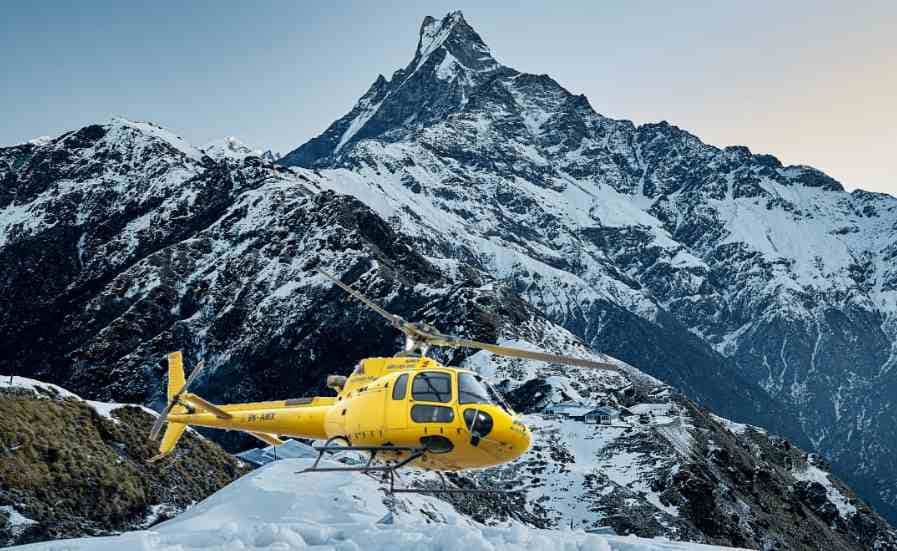
Early in the morning, have a lifetime helicopter tour by visiting the helipad. Flight to Lukla, Everest Base Camp and Kala Patthar with the gorgeous views of Mount Everest, Lhotse and Ama Dablam. Hotel Everest View breakfast with a mountain view. At the end of the morning, return to Kathmandu and squander the day. Overnight in Kathmandu.
In the morning, have breakfast and visit the major UNESCO World Heritage sites, including Swayambhunath, Patan Durbar Square, Pashupatinath Temple, and Boudhanath Stupa. In the afternoon, travel to Pokhara by a 25-minute flight with a scenic view of the Himalayas. Go to your hotel on the shore of the lake and sleep by Phewa Lake. Overnight in Pokhara.
Visit the Pokhara Phewa Lake, and Tal Barahi Temple, Devi fall, Gupteshwor cave, Bindhyabasini Temple, and World Peace Pagoda. Enjoy a refreshing environment that surrounds the Machhapuchre and Annapurna mountains. Leisured lunch or exploration of the lakeside in the evening.
Breakfast and then fly back to Kathmandu. Arrival and transfer to the hotel. Spend your last night in Nepal with a parting dinner featuring traditional Nepali cuisine and a live cultural show to celebrate your incredible adventure. Overnight in Kathmandu.
Have breakfast at the hotel and get transferred to Tribhuvan International Airport and depart. Go away with an unforgettable experience of luxury, adventure and the unmatched beauty of the Himalayas.
A luxury adventure to Nepal is a mixture of stunning scenery, rich culture and mountainous activities. To ensure a smooth ride, it is essential to plan for local practices, logistics, medical needs, and practicality. This guide is all you need to know before you make a booking and head out on your six-day luxury tour.
Flight Information
The tour package does not include international airfare to and from Kathmandu; therefore, tourists are responsible for booking flights that match the tour's start and end dates. Included in the itinerary are domestic flights between Kathmandu and Pokhara. It is worth noting that domestic flights in Nepal are frequently affected by weather conditions, which can result in delays or cancellations. As such, it is recommended to have a flexible travel plan to ensure a smooth experience.
Nepal Visa Information
Any traveler visiting Nepal must have an entry visa, which can be easily obtained on arrival at Tribhuvan International Airport. In this case, tourists will be required to complete an arrival card, submit a valid passport with a minimum validity of six months, and pay a visa fee. The cost of the fees varies according to the duration: USD 30 (15 days), USD 50 (30 days), and USD 125 (90 days). To further ease the process, the visa can also be obtained online, within 15 days preceding arrival, or at the Nepalese embassy. Passport-sized photos must also be carried by the travelers when processing.
Travel Insurance
All the participants are strongly advised to have comprehensive travel insurance. Due to the nature of the tour, which involves high-altitude flights around Everest Base Camp and visits to remote areas, trip cancellations, medical emergencies, evacuation, and repatriation should be insured. Emergency air evacuation coverage is of great significance because it enables the coverage of any unexpected situations that can be dealt with quickly and safely.
Health and Physical Fitness
This is a luxury tour suitable for travelers with a moderate to high fitness level. Most of the activities are moderate, although flying high-altitude helicopters around Everest can be a challenge for some individuals. One should be hydrated, limit the use of alcohol at high altitudes, and seek medical attention in case of underlying health conditions or concerns regarding high altitudes. It is a good idea to pack drugs in case of some minor illnesses like headaches, nausea, or dizziness to make the trip as comfortable as possible.
Weather Conditions
The weather conditions in Nepal vary according to the season and the area. Spring (March to May) and autumn (September to November) are considered the best seasons to visit, characterized by warm temperatures and clear weather conditions that are ideal for sightseeing tours and enjoying mountain scenery. The colder season in the mountains is winter (December to February), but there are lower crowds. In contrast, the monsoon season (June to August) is characterized by heavy rainfall, especially in Kathmandu and Pokhara. Tourists should pack versatile clothing, a lightweight rain jacket, and sun protection to help them adapt to the weather.
Tipping Guidelines
Tipping is a normative, not obligatory, practice in Nepal. It is advisable to give tips to guides and drivers around 10-15 percent of the service cost, and to porters or other staff a daily or end-of-service amount. A 10 percent service charge is already included in the restaurants; otherwise, it is customary to leave a small supplementary tip. Tipping is perceived as a sign of appreciation for quality service, not a compulsion.
Safety and Security
As a rule, Nepal is generally considered safe for tourism, with hospitable people and a well-developed tourism infrastructure. However, there are general observations that are recommended, such as keeping valuables locked up, avoiding isolated areas at night, and staying with your group or guide. Always take the advice of your guide, particularly in the case of visiting remote places or high altitude places and inform your embassy in case it is necessary so that you can have a sense of security.
Currency and Money Matters
Nepal is a country whose official currency is the Nepalese Rupee (NPR). The ATMs are highly concentrated in large cities, such as Kathmandu and Pokhara, while remote locations may have fewer ATMs. Most upscale hotels and restaurants accept credit cards, but it's best to use cash for small purchases, tipping, and at local markets. It is recommended that travelers carry clean, undamaged banknotes to avoid the inconveniences of local vendors.
Packing Essentials
Being comfortable and convenient, it is recommended to pack multi-purpose and layered garments to accommodate changes in temperature and terrain. Essentials will include a pair of good walking shoes, a hat, sunglasses, sunscreen, and a light rain jacket. A first aid kit in the form of a travel-size kit, personal medications, a reusable water bottle, and a copy of your passport and insurance are essential. In high-altitude flights, lip balm, moisturizers, and hydration tablets should be considered to ensure that people remain comfortable and healthy.
Altitude Awareness
Although the helicopter tour eliminates the necessity of trekking, especially to reach certain destinations, such as those along the Everest Base Camp, the location is at an elevated altitude. Anyone can experience altitude sickness, regardless of their level of fitness. The general symptoms include headache, nausea, and dizziness. The best precautions include staying hydrated, avoiding alcohol, climbing up slowly where there is an option and seeking the advice of a doctor prior to traveling in order to reduce risks. It is also recommended that altitude sickness medication be carried as a precaution.
Communication and Customary Coexistence
The official language is Nepali, but English is also widely used in hotels, restaurants, and tourist areas. SIM cards that are locally available and offer data plans are cheap and provide good coverage in Kathmandu and Pokhara; however, connectivity is poor in isolated areas. Travelers are encouraged to maintain consistent contact with family or friends to ensure safety and comfort during the journey
Number of people
Price per person
Solo Tour
$2,069.10
2 - 3 people
$2,027.72
4 - 6 people
$1,986.34
7 - 9 people
$1,965.65
10+ people
$1,924.26