




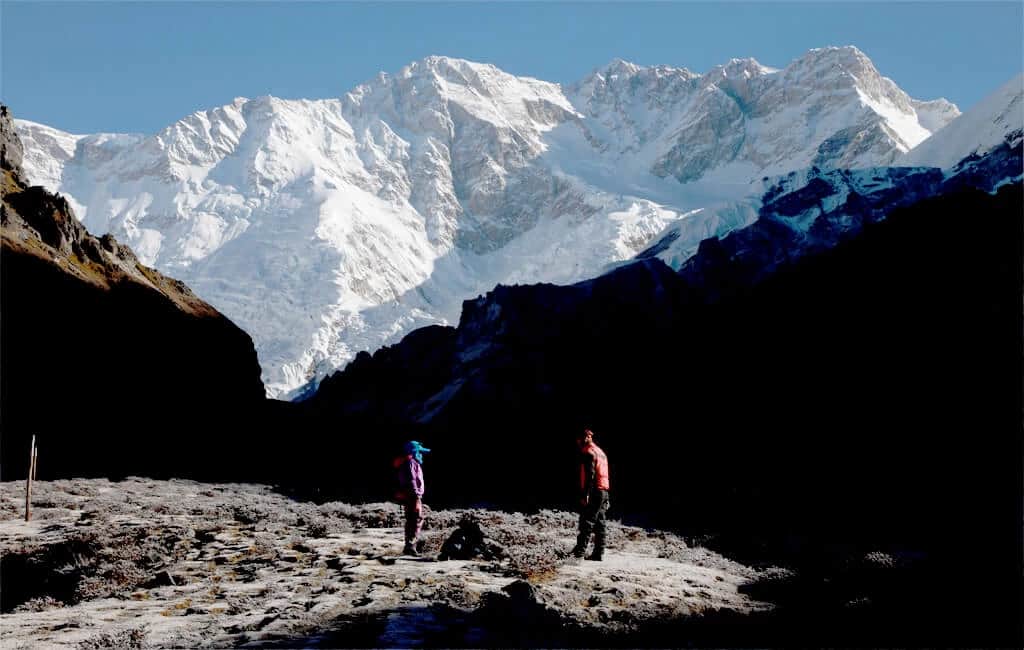
Destination
Everest Tour and Trek
Duration
19 days and 18 nights
Difficulty
Moderate
Max. Elevation
4160 m
Group Size
Max. 10 pax
Accommodation
Standard Options
Vehicles
N/A
Food
Bed included, includes: No meals included
The Kanchenjunga South Base Camp Trek is a comprehensive Himalayan adventure that takes you into one of the most remote and awe-inspiring parts of Nepal. Within a span of 14 days, the trekkers traverse rough trails that cut through dense rhododendron forests, alpine meadows, glacial rivers, and high-altitude glaciers, while also taking in the grandeur of the world's third-highest peak. The trip offers an authentic experience of communities living in the mountains, including the Limbu, Sherpa, and Rai, where cultural experiences are accompanied by stunning scenery.
This journey begins with a picturesque flight from Kathmandu to Bhadrapur, followed by a drive through the tea gardens and terraced fields, and the beautiful hill towns of Phikkal Bazaar and Taplejung. The trail slowly enters the Kanchenjunga Conservation Area, where trekkers will be subjected to a shift in ecosystems, from subtropical forests to alpine landscapes, and finally to the distant Oktang Viewpoint. In this case, the Kanchenjunga South and its neighbouring mountains, including Kabru, Talung, Rathong, Khambachen, and Jannu, present a panoramic view of the great Himalayan mountains.
The expedition concludes with a return trip that passes through conventional villages, allowing one to experience the final cultural experiences before descending the altitude and proceeding back to Kathmandu. This trip is both adventurous and comfortable, featuring tea-house stays, hearty Nepali cuisine, and expert guides, while maintaining the challenge of high-altitude trekking. The expedition is appropriate for average-fitness adventurers who want to go on a far and life-changing Himalayan adventure.
- Majestic Mountains: Be face-to-face with the third-highest peak in the world- Kanchenjunga South, and wander among the other neighboring giants such as Jannu, Kabru, and Talung.
- Scenic Landscapes: Explore a wide variety of glacial rivers, alpine meadows, terraced fields, and valleys of green landscapes that vary with each stride.
- Rich Cultural Experiences: Explore the streets of the Limbu, Sherpa, and Rai communities to experience their vibrant festivals, traditional dances, and intricately carved houses, among other cultural highlights.
- Rare Wildlife: See the elusive Himalayan species of red panda, snow leopard, and Himalayan black bear in their untouched natural habitats.
- Flora and Forests: Stroll through blooming rhododendrons, towering pines, and ancient oak forests to experience a change in seasonal beauty.
- Exhilarating Adventure: Test yourself on rough mountain roads, steep ascending trails, narrow ridges, and high mountain trails that offer a panoramic view at every step.
The Kanchenjunga South Base Camp Trek begins with a scenic flight from Kathmandu to Bhadrapur, followed by a picturesque drive to Taplejung, the gateway to the Kanchenjunga region. A short drive to Suketar marks the starting point of the trek.
From Suketar, the trail descends through Lali Kharka, Kande Bhanjyang, and Yamphudin, passing terraced farmlands, cardamom fields, and traditional villages inhabited by Limbu and Rai communities. As the route progresses, the landscape gradually changes from subtropical forests to dense rhododendron and bamboo woodlands, leading to the remote settlements of Tortong and Cheram.
Beyond Cheram, the trek enters a dramatic alpine environment with glacial rivers, moraines, and expansive mountain views. The trail ascends to Ramche and continues to Oktang, the Kanchenjunga South Base Camp, offering breathtaking views of the south face of Mt. Kanchenjunga, Yalung Glacier, and surrounding peaks.
After reaching base camp, the return journey follows the same route back through Cheram, Yamphudin, and Suketar, allowing trekkers to experience the changing landscapes from a new perspective. This route offers a perfect blend of remote trekking, rich cultural encounters, and high Himalayan scenery, making it one of Nepal’s most rewarding off-the-beaten-path adventures.
- Day01Day 1: Arrival in Kathmandu (1,400 m)
Arrive at Tribhuvan International Airport and transfer to your hotel in Thamel. Rest or explore nearby markets and cafés. Evening briefing with your trekking guide. Overnight in Kathmandu.
- Day02Day 2: Kathmandu – Preparation Day
Final trek preparations, gear check, and permit arrangements. Optional sightseeing or rest. Overnight stay in Kathmandu.
- Day03Day 3: Fly to Bhadrapur & Drive to Taplejung (1,820 m)
Morning flight to Bhadrapur followed by a scenic drive to Taplejung through tea gardens, rivers, and hilly terrain. Overnight at a local teahouse.
- Day04Day 4: Drive Taplejung to Suketar & Trek to Lali Kharka (2,265 m)
Short drive to Suketar, then begin trekking through forests and villages with views of rolling hills. Overnight at Lali Kharka.
- Day05Day 5: Lali Kharka to Kande Bhanjyang (2,130 m)
Descend through terraced farmland and cross small streams. Enjoy peaceful village life and mountain scenery. Overnight stay at Kande Bhanjyang.
- Day06Day 6: Kande Bhanjyang to Yamphudin (2,080 m)
A long but scenic trek through dense forests, ridges, and remote settlements. Yamphudin is the last major village before entering the higher alpine terrain. Overnight stay.
- Day07Day 7: Yamphudin to Tortong (2,980 m)
Ascend through thick rhododendron and bamboo forests. The trail becomes quieter and more remote. Overnight at Tortong.
- Day08Day 8: Tortong to Cheram (3,870 m)
Steady uphill trek with expanding mountain views. Enter alpine landscapes with glacial streams and open valleys. Overnight stay in Cheram.
- Day09Day 9: Acclimatization Day at Cheram
Rest and acclimatization day. Optional short hikes to nearby ridges or lakes to help adjust to the altitude. Overnight in Cheram.
- Day10Day 10: Cheram to Ramche (4,610 m)
A gradual ascent alongside glaciers and moraines. Stunning views of Mt. Jannu and the surrounding peaks. Overnight at Ramche.
- Day11Day 11: Explore Kanchenjunga South Base Camp (Oktang – 4,730 m)
Hike to Oktang, the Kanchenjunga South Base Camp. Enjoy breathtaking views of Kanchenjunga South Face, glaciers, and towering peaks. Return to Ramche for an overnight stay.
- Day12Day 12: Ramche to Cheram
Descend back through alpine terrain, enjoying easier walking and improved oxygen levels. Overnight at Cheram.
- Day13Day 13: Cheram to Tortong
Continue descending through forests and river valleys. Overnight stay at Tortong.
- Day14Day 14: Tortong to Yamphudin
Trek down through lush forests and scattered settlements, returning to the last major village of the region. Overnight in Yamphudin.
- Day15Day 15: Yamphudin to Kande Bhanjyang
Retrace the trail through ridges, farmland, and river crossings. Overnight stay at Kande Bhanjyang.
- Day16Day 16: Kande Bhanjyang to Lali Kharka
A moderate trek with mixed ascents and descents, offering final views of the eastern hills. Overnight at Lali Kharka.
- Day17Day 17: Lali Kharka to Suketar & Drive to Taplejung
Short trek to Suketar followed by a drive back to Taplejung. Overnight stay.
- Day18Day 18: Drive Taplejung to Bhadrapur
Long scenic drive through hills, rivers, and lowland landscapes. Overnight near the airport in Bhadrapur.
- Day19Day 19: Fly Bhadrapur to Kathmandu and Departure
Morning flight back to Kathmandu. Transfer to the hotel or proceed with onward international departure.
- Private airport transfers and luxury ground transportation in Kathmandu
- 4–5 star hotel accommodation in Kathmandu
- Domestic flights and/or private transport as per the itinerary
- Premium lodge/teahouse accommodation during the trek
- Experienced licensed trekking guide and dedicated porter service
- All meals during the trek and daily breakfast in Kathmandu
- Trekking permits, restricted area permits, and government taxes
- First-aid support and full trip assistance throughout the journey
- International airfare and Nepal visa fees
- Personal expenses and extra beverages
- Travel insurance (mandatory for remote trekking, including evacuation)
- Tips for the guide and porter
- Optional activities not mentioned in the itinerary
The best time to trek to Kanchenjunga South Base Camp is during spring (March–May) and autumn (September–November). Spring brings blooming rhododendron forests, stable weather, and pleasant temperatures, while autumn offers clear skies, crisp air, and excellent mountain visibility. The monsoon season (June–August) makes trails muddy and risky due to heavy rainfall, and winter (December–February) can be extremely cold with heavy snowfall at higher elevations. For the safest conditions and best views, spring and autumn are ideal.
The best time to trek to Kanchenjunga South Base Camp is during spring (March–May) and autumn (September–November). Spring brings blooming rhododendron forests, stable weather, and pleasant temperatures, while autumn offers clear skies, crisp air, and excellent mountain visibility. The monsoon season (June–August) makes trails muddy and risky due to heavy rainfall, and winter (December–February) can be extremely cold with heavy snowfall at higher elevations. For the safest conditions and best views, spring and autumn are ideal.
A Trek to the Kanchenjunga South Base Camp is an expedition into one of the most remote parts of Nepal. It is wise to have a feel of the physical requirements, weather conditions, cultural undertones, as well as the logistical needs, before stepping on such trails. Good preparation will make the trek a safe, rewarding, and memorable experience.
The Difficulty and Physical Preparation of Trek.
Kanchenjunga South Base Camp Trek is a moderate one. The trekkers will face steep climbs, narrow ridges, and rocky trails, which will demand stamina and agility. Whereas the trail is relatively easier than the North Base Camp route, it also requires a high degree of fitness. It must be prepared: cardio exercises (such as running, hiking, or climbing stairs) and strength training should be introduced at least 4-5 weeks before the trek. Carrying a heavy backpack in rough terrain can be tiring, so consider hiring a porter to help you carry the bag, making your journey easier and more worthwhile.
Altitude and Acclimatization
The expedition begins at one thousand meters at Phikkal Bazar and ascends to 4730 meters at the South Base Camp. The altitude gain in a short period of a few days increases the individual's risk of developing altitude sickness. Although the tour plan is gradual in its ascent and includes short acclimatization breaks, trekkers should be cautious with their bodies. It should not disregard symptoms such as headaches, nausea, fatigue, or dizziness. Hydration, appropriate eating habits, and a gradual, moderate progression are the key measures to safe acclimatization.
Weather/Trail Conditions and Terrain.
Kanchenjunga trails are very different. There are lower areas with thick forests of rhododendron, oak, and bamboo with slippery roots and wet leaves. As trekkers climb, the terrain changes to alpine meadows and steep, high-altitude trails, including loose rocks and narrow ridges near glaciers. The landscape also presents a challenge to stamina and balance, and the weather can cause the paths to be slippery and hazardous, with unforeseen obstacles. Trekking poles and footwear that support the ankle should be used to manage the conditions.
Weather and Best Seasons
The Kanchenjunga area has unpredictable weather. Nights are also very cold, and rain or snow can fall at any time, even during the trekking season. The most suitable seasons for hiking are spring (March to May) and Autumn (September to November). Autumn offers clear weather, stable temperatures, and crystal-clear mountain views, while spring provides vibrant rhododendron flowers and pleasant temperatures. Monsoon (June-August) and Winter (December-February) are not usually recommended, as it is very likely to rain, landslides may occur, and sometimes even freezing temperatures are experienced.
Accommodation and Meals
Accommodation is available along the trail, mostly in tea houses and lodges that provide the bare essentials, such as twin beds and blankets. The higher up, the less it is furnished, and shared Asian-style squat bathrooms and little heating are common. The food is straightforward, wholesome, and full of energy. Nepali cuisine includes dishes such as dal bhat (rice and lentil soup), thukpa, dhido, and chow mein. Noodles, eggs, pasta and local drinks like butter tea and sel roti are also served in teahouses. It is recommended that trekkers bring snacks high in energy, such as nuts and dried fruits, to sustain them through the long trekking days.
Connectivity and Communication.
Lower altitudes, such as Phikkal Bazar and Taplejung, have mobile networks from NTC and Ncell, but higher altitudes, such as Tortong, Cheram, and Ramche, do not have full coverage. There are also teahouses where Wi-Fi is offered at a fee, albeit very low speed. There are satellite phones that can be used in emergency cases, but at a high price. Trekkers should also come with a fully charged power bank, as there are few power charging points, and those become more costly the higher the altitude.
Permits and Regulations
The Kanchenjunga area is restricted to special permits. Trekkers must have a minimum of two people in their group and must travel with an authorized guide. Entry permits to the Kanchenjunga Conservation Area Project (KCAP) are NPR 2,000 per individual, and a Restricted Area Permit (RAP) to Yamphuding is USD 20 per person per week. The organized trekking packages normally cover all the permit fees. These regulations should be adhered to to protect the delicate environment and local culture.
Health, Safety, and Insurance
Trekkers must focus on hydration, nutrition, and suitable clothing layering to counter the cold and unexpected weather conditions. There should not be smoking and alcohol consumption, especially at high altitudes. Extensive travel insurance, including coverage for high-altitude trekking (at least up to 6000 meters) and emergency evacuation, is a necessity. Personal medication and first aid kits should always be carried, and trekkers should be prepared in the event of a lack of medical facilities along the route.
Cultural Etiquette
Limbu, Rai, and Sherpa are the communities found in the Kanchenjunga area. There should be a respectful interaction. Local festivals, traditional dances, or rituals may be observed by trekkers; this should be done politely and respectfully, without intrusion. Photography of individuals and holy places is to be taken only with authority, and a low environmental impact is also promoted during the trek.
Give us a review
Pricing
Number of people
Price per person