




Destination
Everest Tour and Trek
Duration
24 days and 23 nights
Difficulty
Strenuous
Max. Elevation
6189 m
Group Size
Max. 10 pax
Accommodation
Standard Options
Vehicles
N/A
Food
Bed included, includes: No meals included
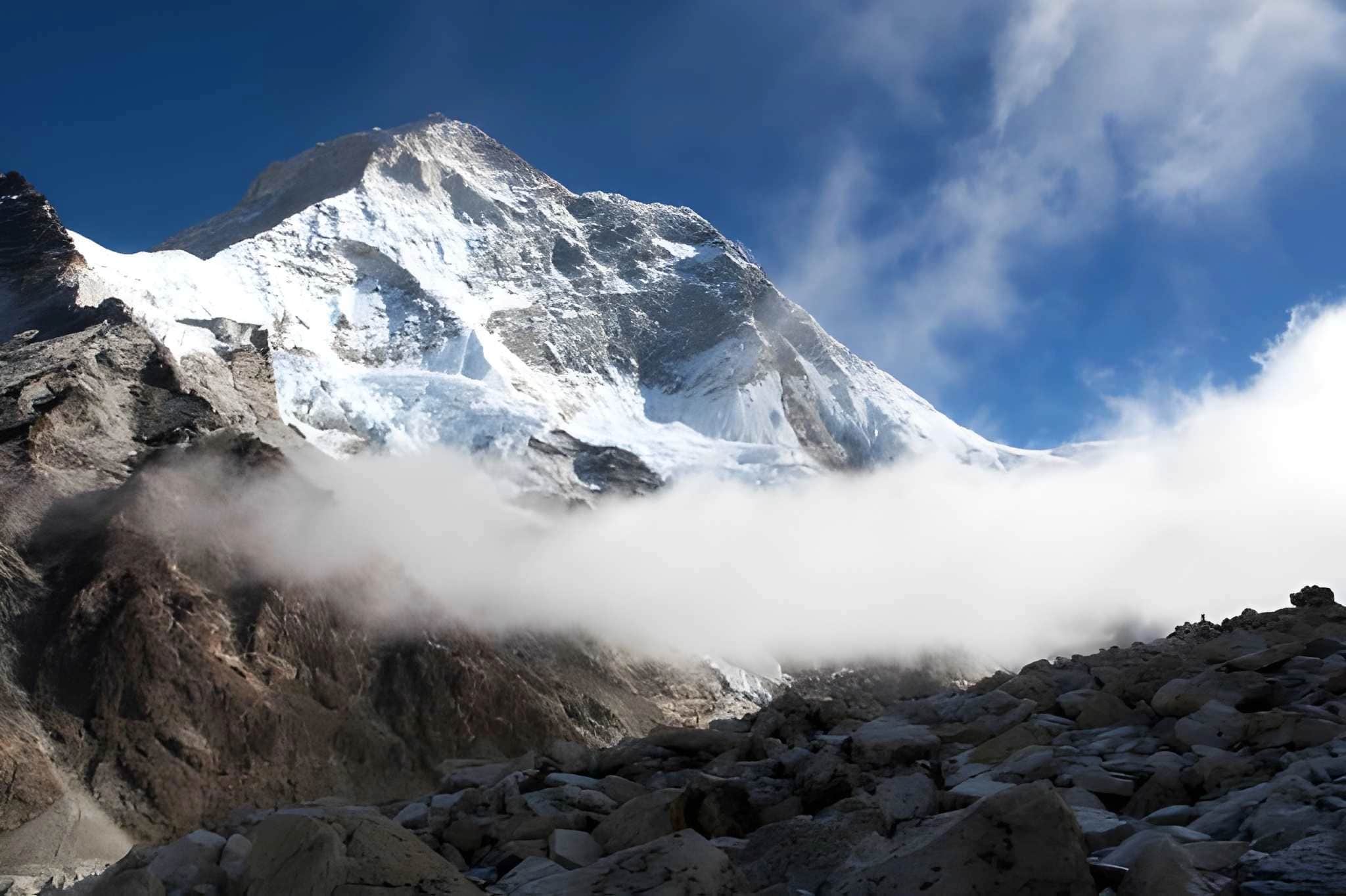
The Makalu Circuit Trek is an altitude expedition that not only demands physical endurance but also mental fortitude. This trek is located in the Mahalangur area of Nepal and circumnavigates the fifth-highest peak in the world, Mt. Makalu (8,481m), a mountain with a steep pyramidal shape. The expedition features mountainous scenery, challenging wilderness routes, and breathtaking Himalayan views, making it a journey of a lifetime. Some of the highest and most unforgettable mountain passes in the world, such as Sherpani Col (6,180m), West Col (6,143m), Amphu Lapcha (5,845m), and Khangma La (5,550m) are experienced by Trekkers.
This is not just a hike to overcome mountains, but an engaging expedition into the cultural and natural heritage of Nepal. The travelers have a sightseeing of the Sherpa, Rai and Limbu peoples and go through the landscapes of Makalu Barun National Park, and then they join the familiar routes of the Everest region. The Makalu Circuit is an adventure and comfort trip that combines teahouse accommodations and tented camps.
With well-trained Sherpa guides and porters, trekkers are guaranteed a safe passage through challenging passes, altitudes, and weather conditions. The right acclimatization days on some of the critical areas, such as Makalu Base Camp and Amphu Labsta Base Camp, will guarantee a balanced mix of adventure and safety. This is a trek that is more of an off-the-beaten-path Himalayan adventure, ideal for fit and experienced trekkers.
- Summit high mountain passes like Sherpani Col, West Col, Amphu Lapcha Pass, and Khangma La.
- Thrilling Himalayan flights Kathmandu- Tumlingador and Kathmandu to Lukla.
- Aspects of the culture of Sherpa, Rai, and Limbu.
- Visit the Makalu Barun and Sagarmatha National Parks, which are perfectly clean.
- Breathtaking scenery of lofty mountains: Makalu, Everest, Lhotse, Baruntse.
- Taste authentic Nepali food, such as the traditional Dal-Bhat.
The Makalu Circuit trek begins with a picturesque flight from Kathmandu to Tumlingtar, followed by a drive to Num, an ancient trading post. The route slowly goes up through Seduwa, Tashigaon, Kaumadanda, Dobate, Yangla Kharka, and Langmale Kharka, where trekkers can have acclimatization in breathtaking scenery.
The expedition then moves to Makalu Base Camp (4,870m), where one can acclimate to the high altitude and explore the nearby mountains. Everest Trekkers proceed to Swiss Base Camp (5,150m) and Sherpani Col Base Camp (5,688m), cross Sherpani Col Pass (6,180m), and reach Baruntse Base Camp (5,443m). The expedition then proceeds to Amphu Labsta Base Camp (5,527m) and then a hard-earned pass at Amphu Labsta La (5,845m) to put the expedition into the Everest zone, after which it passes through Chhukung, Lobuche, Gorakshep, Phortse, Namche Bazaar, and finally Lukla to continue on a flight back to Kathmandu.
- Day01Day 1: Arrival in Kathmandu
You will receive a very warm reception in Kathmandu, where you will be transferred to a hotel. Spend the day resting, recuperating from your trip, and get ready to embark on the adventure you've planned. Meanwhile, in the evening, have a welcome drink and a briefing with your guide, who will familiarize you with the trek and any questions you may have about altitude issues. One-night accommodation in a nice hotel.
- Day02Day 2: Sightseeing in Kathmandu
Explore the home of Kathmandu Valley's cultural greatness. Explore the UNESCO World Heritage sites, including Swayambhunath (also known as the Monkey Temple), Pashupatinath, Boudhanath Stupa, and Durbar Square. These are the places where one can get an idea of the ancient architecture, colorful culture, and spirituality of Nepal. In the evening, you may return to your hotel and enjoy a Nepali dinner.
- Day03Day 3: Flight Tumlinghar and Drive Num (1,560m, 5 hours)
Make a picturesque 45-minute flight trip between Kathmandu and Tumlingtar, where you can enjoy the Himalayan ranges' aerial view. Starting at Tumlingtar, take about five hours back and forth through fertile valleys and local villages to Num, a trading town of old times, and the departure point of your trek. One-night accommodation in a mountain lodge.
- Day04Day 4: Trekking, Num to Seduwa (1,500m, 5 hours)
The adventure starts on soft ascents over terraced fields, wooded trails, and riverside tracks. On their way to the traditional Rai and Sherpa villages, trekkers get to experience the local lifestyle and culture firsthand. The trail is also able to gain altitude gradually and be comfortable enough, which lets the body begin to be acclimatized. Simple, clean mountain lodge, Seduwa, overnight.
- Day05Day 5: Hike between Seduwa and Tashigaon (2,100m, 6 hours)
Keep climbing up and down picturesque valleys and wooden suspension bridges across raging rivers. The landscape begins to get steeper, with some patches of rocks. Tashigaon is beautiful, with hills surrounding it and the early peaks of the high Himalayas in sight. Spend the night in a small mountain lodge.
- Day06Day 6: Hiking between Tashigaon and Kaumadanda (3,500m, 6 hours)
The path slowly ascends into greater heights, passing through mountain forests, terraced agricultural land, and small villages. The views are widened to see far snow-capped mountains. It is a fairly difficult part with gorgeous photography possibilities. Lodge in Kaumadanda mountain.
- Day07Day 7: Walk Kaumadanda to Dobate across Keke La (3,540m through 4,170m, 6 hours)
The current journey is more challenging, and it involves crossing the Keke La Pass (4,170m). The line crawls and crosses ridges and valleys, giving a panoramic view of Makalu and other Himalayan giants. On the other side of the pass, go down a little into Dobate, a little hamlet enclosed by a rough landscape. Overnight, one day in a mountain lodge.
- Day08Day 8: Dobate to Yangla Kharka (3,557m, 6 hours) trek
In the modern world, Trekking will lead you across high alpine meadows and through rocky slopes. You can catch a glimpse of local wildlife, such as the Himalayan Thar and blue sheep. The path is moderate, with both upward and downward sections, crossing small villages and featuring prayer flags waving along the way. In the Yangla Kharka mountain lodge.
- Day09Day 9: Trekking between Yangla Kharka and Langmale Kharka (4,410m, 6 hours)
The path ascends steadily towards a more mountainous landscape, featuring glacial moraine, rock formations, and spectacular views of the surrounding peaks. Breathing starts to have a small effect at high altitudes, causing the pace to slow down. The Langmale Kharka is a remote camping trip in the alpine setting. Lodge Overnight in a tented camp or lodge.
- Day10Day 10: Makalu Base Camp (4,870m, 6 hours) Trekking from Langmale Kharka to Makalu Base Camp
The current hiking path is directed today to Makalu Base Camp, which is the major attraction on the Makalu Circuit. The path goes through glaciers, sharp valleys, and elevated ridges. The Makalu views, together with the other Himalayan peaks, are stunning. On arrival, find a place in the camp, rest, and get ready for the acclimatization day.
- Day11Day 11: Makalu Base Camp Rest Day
An acclimatization day and exploration day in Makalu Base Camp. Make a little hike to the close peaks or ridges like Peak 3 Danda, and have a marvelous mountainous sight. The day is essential to acclimate your body to high altitude so as to avoid altitude sickness. Overnight in the camp.
- Day12Day 12: Makalu Base Camp to Swiss Base Camp (5,150m, 6 hours) trek
The route in the modern world is based on glacial moraines and rocky routes. The trekkers will experience high Himalayan conditions, including snowfields, ice, and crevasses. Swiss Base Camp is a peaceful and remote place where one can spend the night in a tented camp.
- Day13Day 13: Hike from Swiss Base Camp to Sherpani Col Base Camp(5,688m, 6 hours)
An average strenuous day with continuous climbing, with spectacular sights of the glaciers and mountains that surround the area. Sherpani Col Base Camp is one of the camps that trains trekkers before going to the high passes. Overnight in a tented camp.
- Day14Day 14: Hike through Sherpani Col Base Camp to Baruntse Base Camp through Sherpani Col (6,180m) and West Col (7 hours)
The most difficult day was the crossing of Sherpani Col and West Col, which are two of the highest points in the trek. The path takes one up steep, ascending rocky and icy slopes. The Makalu and the views of the other surrounding peaks are incomparable. Cross over the passes and arrive at the Baruntse Base Camp, and rest. Overnight in a tented camp.
- Day15Day 15: Baruntse Base Camp to Amphu Labsta Base Camp (5,527m, 6 hours) Trek
An adventure in glacial terrain at an elevation. The landscape is rugged and requires careful footing, offering breathtaking views of other mountains and glaciers. The Amphu Labsta Base Camp is a base of the Amphu Labsta La Pass. Overnight in a tented camp.
- Day16Day 16: Amphu Labsta Base Camp Rest Day
One day rest period of acclimatization. Trekkers will get an opportunity to learn about the glaciers along the way, the clean environment, and be ready to reach Amphu Labsta La Pass on the next day. Overnight in a tented camp.
- Day17Day 17: Hiking between Amphu Labsta Base Camp and Chhukung (4,730 m) via Amphu Labsta La Pass (5,845 m, 7.5 hours)
Passing through the Amphu Labsta La Pass, one of the greatest attractions during this trek, offers an unbelievable view of the glaciers and their surrounding mountains. The next stage is entering the Everest region at Chhukung, where conditions are slightly improved with the presence of mountain lodges. Overnight in Chhukung.
- Day18Day 18: Hike at Chhukung to Lobuche with Khangma La Pass (5,535m, 7 hours)
This day is marked by another pass over Khangma La, which is a rocky and glacial pass. On the way down, go to Lobuche, a distant village with superb views of Nuptse and other mountains. Overnight in a mountain lodge.
- Day19Day 19: Hiking between Lobuche and Gorakshep (5,140m) with a visit to the Everest Base Camp (5,365m, 6.5 hours)
An unforgettable day-long hiking experience to Gorakshep and a short trip to the Everest Base Camp, one of the most famous Himalayan sites. The route incorporates rocky terrain and glaciers, offering an awe-inspiring view of Everest, Lhotse, and Nuptse. Overnight in a mountain lodge.
- Day20Day 20: Hike from Gorakshep to Phortse (4,200m) through Kalapathar (5,545m, 7 hours)
Wake up early in the morning and climb the Kalapathar to have the final panoramic view of Everest. Go down to Phortse by the scenic tracks, through rhododendron trees and the traditional Sherpa villages. Overnight in a cozy teahouse.
- Day21Day 21: Hiking between Phortse and Namche Bazaar (3,440m, 5 hours)
Travel over the passes of the Alps and the Alps forests into Namche Bazaar, the center of the Khumbu. Experience the local culture, visit local markets, and stay in comfortable lodges. Overnight in a mountain lodge.
- Day22Day 22: Hike between Namche Bazaar to Lukla (2,840m, 7 hours)
The last leg of the trip is traversed through the lower-altitude forest and rivers, culminating in Lukla, the gateway to the Everest region. Share the triumphant Makalu Circuit with your guides and porters. Spend the night in a country house.
- Day23Day 23: Kathmandu flight via Fly Lukla (30 minutes)
Early morning scenic flight back to Kathmandu. Take the day off and have an evening dinner program with the Tourist Link Trek and Expedition as they enjoy the memories of the trek. Overnight in the hotel.
- Day24Day 24: Kathmandu-Day 24: Kathmandu-Departure
Move to the international airport to board your next flight. Consider the adventure, spectacular views, and culture of the Makalu Circuit Trek.
- Private airport transfers and luxury ground transportation in Kathmandu
- 4–5 star hotel accommodation in Kathmandu
- Domestic transport and logistics as per the itinerary
- Premium teahouse/lodge accommodation during the trek
- Experienced licensed trekking guide and dedicated porter service
- All meals during the trek and daily breakfast in Kathmandu
- Restricted area permits, national park fees, and government taxes
- First-aid support and full trip assistance throughout the journey
- International airfare and Nepal visa fees
- Personal expenses and extra beverages
- Travel insurance (mandatory for remote trekking, including evacuation)
- Tips for the guide and porter
- Optional activities not mentioned in the itinerary
The ideal seasons for the Makalu Circuit Trek are spring (March–May) and autumn (September–December). Spring offers blooming rhododendrons, lush valleys, and mild weather, while autumn provides clear skies, crisp air, and panoramic mountain views. Monsoon (June–August) brings heavy rain and slippery trails, and winter (December–February) can be extremely cold at higher altitudes. For safety, comfort, and spectacular scenery, plan your trek during spring or autumn.
The ideal seasons for the Makalu Circuit Trek are spring (March–May) and autumn (September–December). Spring offers blooming rhododendrons, lush valleys, and mild weather, while autumn provides clear skies, crisp air, and panoramic mountain views. Monsoon (June–August) brings heavy rain and slippery trails, and winter (December–February) can be extremely cold at higher altitudes. For safety, comfort, and spectacular scenery, plan your trek during spring or autumn.
Good to Know
Beginning on the Makalu Circuit Trek is a journey to the heart of the Himalayas, where adventure, culture, and nature converge. This is a physically challenging, culturally diverse, and spectacular trek. Having the right mindset and readiness for the trip, in terms of fitness, equipment, safety, and cultural etiquette, makes it an experience worth remembering. The following is a comprehensive guide on all you should know before your trek.
Altitude Awareness
This trek takes one through challenging high-altitude passes, including Sherpani Col (6,180 m), West Col (6,143 m), and Amphu Lapcha Pass (5,845 m). Above 3,500 meters, altitude sickness is a real issue. Its symptoms can be headache, nausea, dizziness, and fatigue. In order to reduce the risks, one must climb slowly, involve acclimatization days, remain hydrated and eat carbohydrate-rich food. The key is that you must report the symptoms to your guide immediately and adhere to the rest schedules and guidelines provided by the seasoned Sherpa personnel.
Accommodation & Meals:
In Kathmandu, there are hotels where one can stay. In the trekking trail, teahouses or campsites provide accommodation. Teahouses are very basic but home-like and usually contain beds, blankets, and shared washrooms. Breakfast, lunch, and dinner common to tea-houses include Nepali and Tibetan cuisine, such as dal-bhat, noodles, soups, and domestic vegetables.
Carry snacks with high energy levels, such as chocolate, nuts, or energy bars, on trekking days. Carry personal toiletries and a small towel in a pack when travelling to high altitudes, as amenities are often scarce at these elevations.
Permits & Documentation
A visit to the Makalu area will also require the use of a TIMS card and a Makalu-Barun National Park entry permit, which are most often arranged by your trekking operator. It is also recommended that trekkers carry a copy of their passport, trekking permits, and a valid ID, as the authorities at the park may inspect some of the trails. This way, it is always good to have these documents when planning a trekking experience.
Packing Essentials
This is necessary to be well geared. Layered and water-resistant jackets, trekking shoes, gloves, hats, sunglasses, sunscreen, sleeping bag. A day pack with water, snacks, and personal items, along with a small first aid kit, is essential even in the best season for trekking. The other products, including a headlamp, trekking map, and power bank, could be handy in remote locations where power supplies are limited.
Connectivity & Safety.
The mobile network is not great, and there is limited internet connectivity, which is only available in select teahouses.
Guides are all trained in first aid skills, high-altitude safety precautions, and emergency evacuation plans, and have access to a medical kit and communication gadgets. Do it as they say, do not take walks alone into lonely places, and be prepared to take chances of changing weather, like in the Himalayas.
Wildlife & Nature
The Makalu-Barun National Park harbors the red pandas, musk deer, clouded leopards, the Himalayan black bears, and more than 440 species of birds. The landscapes in the region consist of rhododendron forests, oak forests, juniper forests, alpine meadows and clear rivers. Trekkers should be cautious around wildlife; they should not disturb these animals, as this will not only save them but also help preserve the natural environment for visitors.
The tour visits isolated Sherpa and Tibetan villages. Be mindful of local cultures by removing your shoes at temples, always asking permission before taking photos, and greeting villagers with polite bows. It may also be an experience worth the interaction with the locals, which will offer a better insight into their day-to-day lives, religion, and customary festivities, making the trekking exercise not merely a sightseeing mission.
Travel Insurance
It should provide comprehensive coverage for travel and rescue, high-altitude trekking, emergency evacuation, medical treatment, and high-altitude trekking above 4,000 m. The right insurance is an assurance that one will never lose hope in the case of unexpected events during the trek.
Health & Hygiene.
A first aid kit, a hand sanitizer, water purification pills, and wet wipes. To prevent stomach problems, only boiled or filtered water is to be used. The teahouses will not have many hygienic facilities; however, adding some amenities, such as more toiletries, spare clothes, and a towel, will make one comfortable on any long day trek.
Environmental Responsibility
The route passes through fragile ecosystems, including alpine meadows and national parks. To reduce your environmental footprint, use reusable water containers, opt for reusable plastics, choose the right paths, and refrain from harming local animals and flora. Responsible trekking would ensure that this beautiful Himalayan region is preserved for the enjoyment of future generations of adventurers.
Give us a review
Pricing
Number of people
Price per person