



Destination
Nepal Tour
Duration
21 days and 20 nights
Difficulty
Challenging
Max. Elevation
5670 m
Group Size
Max. 10 pax
Accommodation
Standard Options
Vehicles
N/A
Food
No bed or meals included
The Upper Dolpo Trek is a 21-day trip into a very remote and isolated area of Nepal. Lying between the high Tibetan Plateau and the Dhaulagiri range, Upper Dolpo is an all-inclusive destination for trekkers, offering a unique blend of nature, culture, and spirituality. The route will take you to harsher landscapes, mountain ranges, and centuries-old villages with turquoise lakes, showcasing a world that has not been completely altered by modern tourism.
The Dolpo valley, with its pristine surroundings and distinctive cultural heritage, remained isolated from foreigners until 1989, which has successfully preserved its ancient traditions of Tibetan Buddhism and Bon Po. In addition to the dramatic Himalayan landscapes of Dhaulagiri, Annapurna, and Kanjiroba, trekkers also encounter some of the rare species of wildlife, including snow leopards, blue sheep, musk deer, and the Himalayan langur.
A trip to Upper Dolpo is more of a cultural process, rather than an adventure. The expedition provides a unique insight into the lives of high-altitude residents who live above 4,000 meters in their local area, their culture, festivals, and religious practices, which remain largely unaffected by modern civilization. The ancient monasteries, such as the 800-year-old Shey Gompa, the holy Shey Phoksundo Lake, and the old settlements, including Ringmo Village, offer a wealth of information about the area's history.
The trek is a mix of adventure, thrill and spiritual journey and is hence one of the exclusive trekking adventures in Nepal. The participants will cross high passes, enter unknown valleys, and camp in the midst of one of the most stunning Himalayan landscapes in the world, where they will interact with local people in a respectful and meaningful manner.
- Crystal Clear Views: Turquoise Shey Phoksundo Lake, elevated valleys, and mountain-wide Himalayan landscapes featuring Dhauligari, Annapurna and Kanjiroba.
- Cultural Immersion: Traditional Tibetan Buddhist and Bon Po communities, including ancient monasteries such as the 800-year-old Shey Gompa, and small villages like Ringmo.
- High-Altitude Adventure: Strenuous passes such as Kang La (5,151m), Jeng La (4,845m), and spectacular mountain scenery.
- Wildlife & Nature: The region is home to notable species such as snow leopards, blue sheep, musk deer, and Himalayan langurs. Edelweiss and Orchids are among the seasonal alpine flowers.
The Upper Dolpo Trek begins with a flight from Kathmandu to Nepalgunj and a domestic flight to Juphal, the entrance point to the area. Here, the trekkers slowly pass through Dunai, Ankhe, and Renje, where they explore the remote valleys, riverside and ancient villages. On the path, trekkers pass through traditional Tibetan-Buddhist and Bon Po villages, experiencing the unrivalled beauty of the Shey Phoksundo National Park, which features a turquoise lake, gorges, and wooded walks. The journey is a combination of cultural experience and the calmness of untouched nature.
You take a trip across high passes, Kang La (5,151m) and Jeng La (4,845m), which offer a view of Dhaulagiri, Annapurna, and Manaslu. The road goes by Tokyu Gaon, Dho Tarap, and Khani Gaon, and is completed by Jupha, where aerial transport can be taken to Kathmandu. The route passes through villages such as Tokyu Gaon, Dho Tarap, and Khani Gaon, then returns to Juphal, from where air travel is available to Kathmandu. The path combines challenging high-altitude walks, stunning natural views, wildlife spotting, and a unique experience with ancient cultures, making it a one-of-a-kind and worthwhile Himalayan adventure.
- Day01Day 1: Kathmandu to Nepalgunj (150m)
Fly to Kathmandu and on to Nepalgunj by a domestic flight. On arrival, check in your hotel, and relax, acclimatize to the change of altitude and environment. There will also be a briefing of the trek, introduction of the guides and porters and finally preparation of all trekking equipment to the trek ahead.
- Day02Day 2: Nepalgunj to Juphal (2,400m), hike to Dunai (2,150m)
Fly in early in the morning to Juphal, an isolated airstrip that serves as the entry point to the Dolpo Upper Valley. Starting at Juphal, the journey to Dunai, through insignificant villages, rivers, and the wild. The afternoon offers your first real glimpse of the distant Dolpo country and its isolated, untouched scenery.
- Day03Day 3: Dunai (2,150m) to Ankhe (2,600m)
Hike an average of 6 hours up and down beautiful river valleys, terraced fields, and tiny hamlets. The trail offers a close encounter with rural life in Upper Dolpo, where local people can be seen performing their daily chores and activities in the fields. The slow pace will allow you to acclimatize to the altitude and enjoy a picturesque view of the mountain.
- Day04Day 4: Ankhe (2,600m) to Renje (3,104m)
The trail is an easy and gradual uphill trek that exposes the trekker to a remote and adventurous feel through mixed forests, rocky trails, and small streams. This day lasts approximately 7 hours, providing an opportunity to observe alpine plants and possibly even animals like the Himalayan Langur or Blue Sheep. Renje village is a small village that provides a peaceful night out with classic accommodation.
- Day05Day 5: Renje (3,104m) to Phoksando Lake (3, 600m)
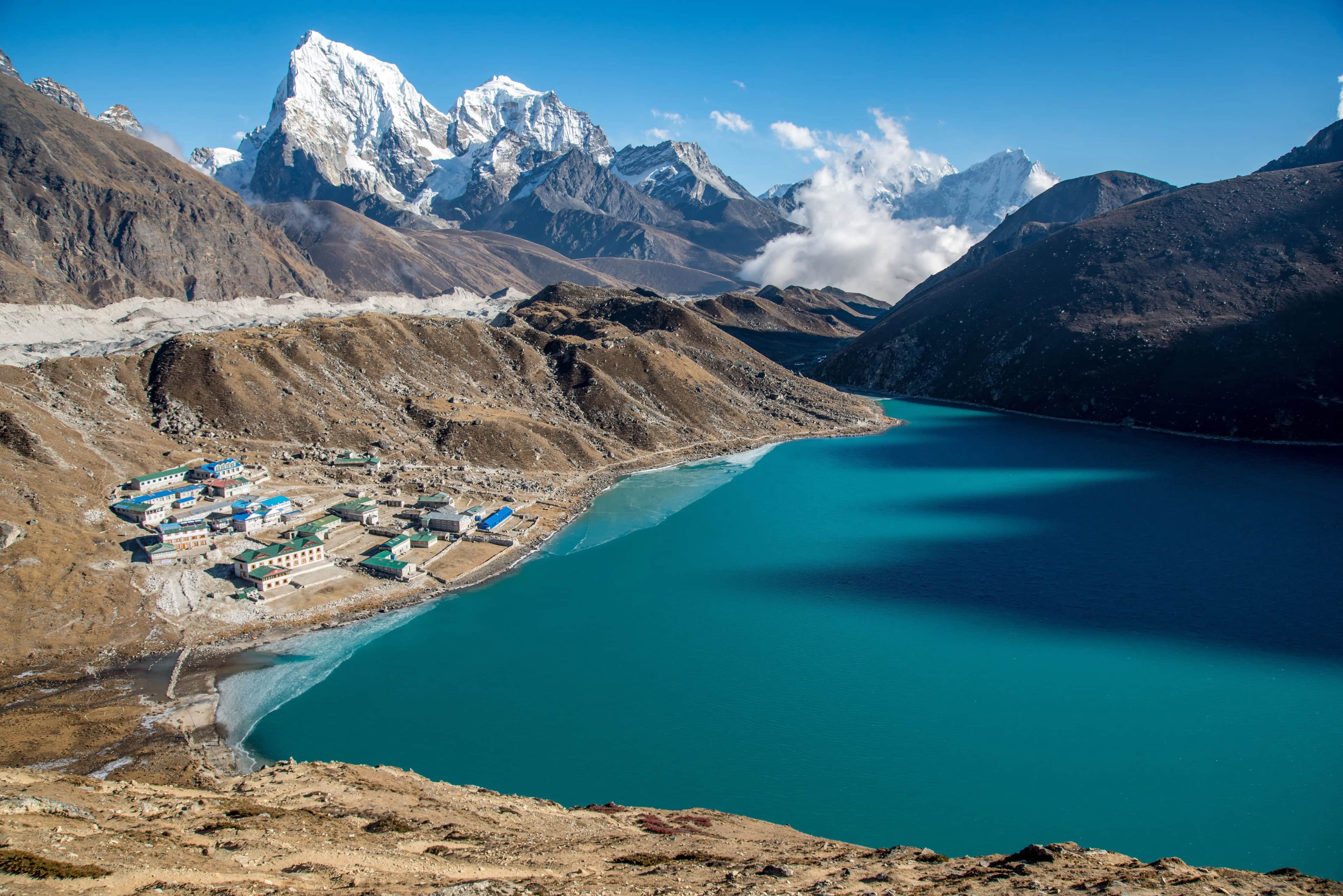
Drive 7 hours to the beautiful Shey Phoksundo Lake. The turquoise waters of the lake and the surrounding cliffs make it one of the most beautiful places in Nepal. The path winds through the valleys of rivers, alpine meadows, and small traditional villages. It is an ideal time to take some photographs, experience the local culture, and relax in the serene setting.
- Day06Day 6: Phoksundo Lake (3600m) to Phoksundo Khola (3507m)
A walk of approximately 6 hours, with a slight downward turn made by the banks of rivers and paths bordered with wild flowers, Edelweiss and orchids and Campanulas. The landscape is diverse, featuring short uphills and downhills, allowing one to take in the wonderful scenery of neighboring cliffs and distant villages.
- Day07Day 7: Phoksundo Khola (3,507m) to Phoksundo Bhanjyang (4,402m)
This is a 7-hour hiking journey that includes gradual climbing into the alpine land. The path cuts across bare valleys and rocky hills, with increasingly panoramic mountain views as you approach Phoksundo Bhanjyang. This is a high pass zone that introduces the trekkers to a more difficult pass in the form of Kang La, which lies ahead.
- Day08Day 8: Phoksundo Bhanjyang (4,402m) to Shey Gompa (4,126m) across Kang La Pass (5,151m)
The challenging 7-hour walk across Kang La Pass, with a summit elevation of 5,151m. The route is tough and requires strength, yet it will be rewarded with stunning panoramic sights of the Dhaulagiri, Annapurna, and Manaslu ranges. Head to Shey Gompa, an isolated monastery and spiritual retreat, and you can spend time with monks and savor the serenity of the environment.
- Day09Day 9: Shey Gompa Exploration
Spend a day touring Shey Gompa, its ancient monastery, and the village. Explore the traditions of Tibetan Buddhism and Bon Po, get to know the local people, and have time to relax and acclimate to the altitude. This is a rest day before going on to higher passes.
- Day10Day 10: Shey Gompa (4,126m) to Namduna Gaon (4,400m) through Saldang La Pass (4,785m)
An elevated (7-hour) walk involving the Saldang La Pass at 4,785m. The trail features moderate climbing and offers panoramic mountain views. Travel to Namduna Gaon, a small village that offers a glimpse of traditional Dolpo culture at a high altitude.
- Day11Day 11: Namduna Gaon (4,400m) to Saldang (3,903m)
Hike 4 hours on descending tracks through the alpine valleys and tiny villages. Saldang is a larger village, and trekkers have the opportunity to study the local architecture, mingle with the local people, and observe the unique way of life of the high-altitude inhabitants.
- Day12Day 12: Saldang (3,903m) to Sibu (3,942m)
Hike through tough mountainous forested trails with an approximate time of 6 hours. The path is still isolated and picturesque, and wildlife can be seen, as well as the serenity of Upper Dolpo is let out.
- Day13Day 13: Sibu (3 942m) to base of Jeng La Pass (4 369m)
A five-hour walk with a slow ascent to the top of the last high pass. The path offers a scenic backdrop of the surrounding mountains and valleys, with small villages that appear along the way, allowing for an insight into local life.
- Day14Day 14: Tokyu Gaon (4,240m) to Daying Shek (3,944m) via the pass of Tokyu Gaon (4,845m)
Traverse the difficult Jeng La Pass, which is at 4,845m and then down to Tokyu Gaon in a period of more than 7 hours. It is a physically challenging hike, but the views of the Himalayan panorama are rewarded at every step. The Tokyu Gaon is an isolated village that offers a glimpse into the Dolpo culture.
- Day15Day 15: Tokyu Gaon (4,240m) to Dho Tarap (4,090m)
Walking 4.5 hours, going down the hill gradually in valleys and villages. Dho Tarap is a prehistoric settlement with unusual architecture and a powerful feeling of preserved cultural traditions.
- Day16Day 16: Dho Tarap (4,090m) to Serkam (3,630m)
Six and a half hours of journeying downwards, by steep valleys and alpine plains. Scenic views, small villages, and wildlife sightseeing can be enjoyed upon adapting to the low altitude and enabling easy trekking in the subsequent days.
- Day17Day 17: Serkam (3,630m) to Khani Gaon (2,250m)
A tedious descent of more than 7 hours into lower settlements. The trail follows forested gullies and river valleys, making the trekkers feel that they have achieved something as they observe the way of life of the communities of Dolpo, which have their homes at lower elevations.
- Day18Day 18: Khani Gaon (2,250m) to Tarakot (2,281m)
Hike 4 hours on smooth Riverside trails across villages and scenic views. This day is a rest day, but still gives the trekkers an opportunity to traverse the gorgeous Dolpo country.
- Day19Day 19: Tarakot (2,281m) to Dunai (2,052m)
Hike up 5 hours of quiet valley and tree-lined roads. Dunai is a larger camp where trekkers can interact with locals and take a brief rest before the final leg of the trek.
- Day20Day 20: Dunai (2,052m) to Juphal (2,402m)
Hike for 3 hours, and end the primary trek. The trail is not that demanding, so one can go through at a slow pace to reminisce about the walk and appreciate the surrounding scenery.
- Day21Day 21: Janewal Fly to Kathmandu through Nepalgunj
Fly back to Kathmandu, ending the 21-day adventure in Dolpo (Upper Dolpo). This is a day of rest, celebration, and reflection on the experiences of the trek before leaving or moving on to further travels in Nepal.
Airport Transfers & Ground Transport
Private car or jeep transfers for all arrivals, departures, and on-ground transportation during the program.
Accommodation
- Kathmandu: A standard twin-sharing 3-star hotel with breakfast.
- Nepalgunj: One night hotel stay with breakfast.
- Camping/Trekking: Twin-sharing tents with full camping equipment, including waterproof two-person tents, dining tents, kitchen tents, tables and chairs, kitchen utensils, and toilet tents.
Meals During Trek
Full-board meals (vegetarian and non-vegetarian options) prepared by an expert cook, including tea and coffee. Fresh seasonal fruits are served every evening after dinner.
Trekking Permits & National Park Fees
All necessary permits, including Shey Phoksundo National Park entry fees and Upper Dolpo Restricted Area trekking permits.
Domestic Flights & Ground Transfers
Round-trip flights covering Kathmandu – Nepalgunj – Juphal – Nepalgunj – Kathmandu, plus ground transport for clients and trekking crew.
Professional Trekking Guide
Services of a highly experienced, friendly, knowledgeable, English-speaking, government-licensed guide, with all expenses—including salary, meals, drinks, accommodation, transport, and insurance—covered.
Sherpa Porters
Dedicated Sherpa porters provided at a ratio of one porter per two trekkers, fully equipped with proper safety and walking gear. Porter expenses, including salary, food, accommodation, and insurance, are included.
Health & Safety Support
- Comprehensive first-aid and medical supplies are available throughout the trek.
- Emergency helicopter evacuation assistance can be arranged (cost covered by your travel insurance).
- Oximeters provided to monitor pulse, oxygen saturation, and heart rate twice daily for altitude sickness awareness.
Trekking Equipment
Use of essential trekking gear, including sleeping bags, down jackets, duffel bags, and walking poles (if needed, to be returned after the trek).
Assistant Guide
An additional assistant guide will be provided for groups of eight or more participants.
Guided Kathmandu Sightseeing
Private city sightseeing in Kathmandu Valley with a government-licensed guide and private vehicle.
Souvenirs & Recognition
A Himalaya Vibes expedition T-shirt is provided to all trekkers as a memento.
Taxes & Official Charges
All applicable government taxes, local taxes/VAT, and official service charges are included.
Additional Value Additions
- Pre-trek briefing covering itinerary, safety protocols, and high-altitude awareness.
- Continuous on-ground support and coordination by Himalaya Vibes operations team to ensure smooth logistics throughout the trek.
Meals in Cities
Lunch and dinner in Kathmandu are not included.
Nepal Entry Visa
Visa fees are not included. A Nepal tourist visa can be obtained on arrival at Tribhuvan International Airport, Kathmandu. Current rates: USD 30 (15 days), USD 50 (30 days), USD 125 (90 days), subject to government regulations.
International Airfare
Flights to and from Nepal are not included.
Travel & Medical Insurance
Personal travel and medical insurance is required. Insurance must cover emergency high-altitude rescue and evacuation.
Personal Expenses
Any personal spending such as shopping, souvenirs, snacks, laundry, phone calls, Wi-Fi, or other discretionary items during the trek or in cities are excluded.
Beverages & Extra Food
All alcoholic and non-alcoholic drinks, soups, tea, coffee, hot chocolate, cocoa, mineral water, additional food items, and any extra meals purchased along the trek or in tea houses are not included.
Desserts & Sweets
Desserts such as chocolates, cakes, pies, puddings, and other sweet items are excluded.
Hot Showers & Charging
Charges for hot showers or electronic device battery charging at tea houses or lodges are not included.
Tipping & Gratuities
Tips for guides, porters, drivers, and support staff are not included. Tipping is customary and expected in Nepal.
Kathmandu Sightseeing Fees
Entrance fees for monuments or heritage sites in Kathmandu are excluded (USD 30 per person for standard sightseeing).
Excess Baggage
Any baggage over 10 kg for Juphal flights is the responsibility of the traveler.
Early Trek Termination
If you must leave the trek early due to illness or other personal reasons, payments already made for flights, hotels, meals, or trekking lodges are non-refundable, and any additional expenses incurred in Kathmandu or elsewhere must be borne by the trekker.
Optional Activities
Costs for any optional tours, excursions, or experiences not listed in the confirmed itinerary are not included.
Equipment Loss or Damage
Any loss, theft, or damage to personal or rented trekking equipment is the responsibility of the trekker.
Spring (March to May) and autumn (September to November) are the most popular seasons for hiking in Upper Dolpo. During spring, there is no precipitation, the climate is average, and the trail is covered with alpine flowers, such as Edelweiss and Orchids. Autumn is a dry season with breathtaking views of the Dhaulagiri, Annapurna, and Manaslu peaks, which is accompanied by constant trekking weather. The summer months (June-August) are not as favorable due to the risk of monsoon, but in Upper Dolpo, the area is drier than other regions, and with caution, it is possible to undertake trekking. Winter (December to February) is extremely cold and snowy, making it only suitable for those with high-altitude trekking experience.
Spring (March to May) and autumn (September to November) are the most popular seasons for hiking in Upper Dolpo. During spring, there is no precipitation, the climate is average, and the trail is covered with alpine flowers, such as Edelweiss and Orchids. Autumn is a dry season with breathtaking views of the Dhaulagiri, Annapurna, and Manaslu peaks, which is accompanied by constant trekking weather. The summer months (June-August) are not as favorable due to the risk of monsoon, but in Upper Dolpo, the area is drier than other regions, and with caution, it is possible to undertake trekking. Winter (December to February) is extremely cold and snowy, making it only suitable for those with high-altitude trekking experience.
The trek in the Upper Dolpo is an expedition in one of the remotest areas of Nepal. It is imperative that one becomes familiar with the permits, logistics, cultural etiquette, and other important information to ensure the trek is safe, enjoyable, and responsible. Higher-than-normal passes, ancient monasteries, sparkling lakes, and the local culture all require proper preparation for all trekkers.
Trekking Permits
Hiking in Dolpo Upper requires special permits, as the area is a restricted zone. Foreign trekkers should also obtain the Upper Dolpo Restricted Area Permit, which can only be obtained with the assistance of a registered trekking agency in Nepal. Moreover, the Dolpo Trek Special Permit is required to visit the Dolpo Upper region in particular. A TIMS (Trekkers' Information Management System) Card is also necessary for trekkers, and it is issued together with the permit. These permits cost between $500-600 USD per individual, depending on the time of the year and governmental laws. The permits are important because it is forbidden to trek in this protected area without these permits.
Best Season to Trek
Spring (March to May) and autumn (September to November) are the most popular seasons for hiking in Upper Dolpo. During spring, there is no precipitation, the climate is average, and the trail is covered with alpine flowers, such as Edelweiss and Orchids. Autumn is a dry season with breathtaking views of the Dhaulagiri, Annapurna, and Manaslu peaks, which is accompanied by constant trekking weather. The summer months (June-August) are not as favorable due to the risk of monsoon, but in Upper Dolpo, the area is drier than other regions, and with caution, it is possible to undertake trekking. Winter (December to February) is extremely cold and snowy, making it only suitable for those with high-altitude trekking experience.
Fitness and Level of Experience.
The Upper Dolpo Trek is a moderate to strenuous trek. Trekkers with prior experience at high altitudes are recommended, as the trek will require daily walks of 4-7 hours and the crossing of high passes such as Kang La (5,151m) and Jeng La (4,845m). Acclimatization helps avoid altitude sickness, and rest days at important spots like Shey Gompa, combined with the gradual rise on the trail, contribute to the prevention of the disease.
Guide, Porter and Trekking Staff.
In the Dolpo upper region, a trekking guide is required to navigate through the remote area, which is very hazardous. The person should strongly consider hiring porters because the trekking days are very long, and the weight of the camping gear is very heavy; each porter carries an average weight of 20kg to 25kg. In case of a camping adventure, the trekking company offers a cook and a kitchen assistant to cook food at the camp sites. Also included in trekking agencies are the necessary equipment, such as a two-person waterproof tent, dining tent, kitchen utensils, sleeping bags, down jackets, and walking poles, which they charge a small fee to rent.
Accommodation and Meals
The Upper Dolpo Trek is primarily conducted through camping, with tents used for overnight stays. Simple teahouses or lodges can be found in lower villages, such as Dunai and Saldang, which are popular with trekkers. Trekking meals are full board, and both vegetarian and non-vegetarian options are available. Tea, coffee and boiled or purified drinking water are usually served.
Emergency and Safety Measures.
Top Dolpo is an isolated and high-altitude area, and medical back-up and safety are essential. Guides are also equipped with first aid and medical supplies and may have to evacuate through a helicopter in case of emergency (paid through travel insurance). Numerous trekking agencies offer oximeters and heart rate and satellite phones as emergency communication tools. The strategic points include acclimatization days to reduce the chances of altitude sickness.
Wildlife and Nature
Upper Dolpo falls within Shey Phoksundo National Park, which is home to some rare wild animals, including the Snow Leopard, Blue Sheep, Musk Deer, and Himalayan Langurs. It is also home to the alpine flora and wildflowers, such as Edelweiss, Orchids, Campanulas, and Forget-Me-Nots, which can be found in the area during spring and summer. The wildlife can be seen during early mornings or evenings, when the animals are most active.
Cultural Etiquette
Tibetan-Buddhist and Bon Po peoples populate the Upper Dolpo area and preserve the ancient traditions. Trekkers are advised to observe the local customs, which require removing shoes before entering monasteries, seeking permission before taking pictures, and behaving quietly. Interaction with locals is encouraged, but visitors must be sensitive to local privacy and cultural norms.
Packing and Essentials
Trekkers are advised to expect unpredictable weather conditions at high altitudes. Suggested clothes are layered clothes, thermo, down jackets, trekking pants, gloves, hats, and rain jackets. Good ankle-high trekking shoes are of vital importance, as are sunscreen, first aid, trekking poles, and sunglasses. The additions, such as cameras, binoculars and journals, are optional to allow one to record the trek.
Transportation and Logistics.
It begins with the Kathmandu-Nepalgunj flight and then the Kathmandu-Juphal domestic flight, which is the greatest access point to Upper Dolpo. The majority of the trekking is done on foot, and there is minimal road transport along the route. Trekkers must also bring sufficient Nepalese Rupees to spend on their own in the villages, as there are very few banks in the remote areas.
Give us a review
Pricing
Number of people
Price per person