



Destination
Bhutan
Duration
4 days and 3 nights
Difficulty
Easy
Max. Elevation
3120 m
Group Size
Max. 20 pax
Accommodation
Standard Options
Vehicles
N/A
Food
Bed included, includes: No meals included
Take a magic trip to the magical kingdom of Bhutan, which is a 4-day trip that will entangle culture, history, and nature harmoniously. The scenic flight into Paro introduces the traveler to breathtaking Himalayan scenery, and then he/she is then taken to a beautiful capital called Thimphu. This is a relaxed sightseeing tour, good for a person who would like to be immersed in culture and do light trekking without the pressures of climbing mountains at very high altitudes.
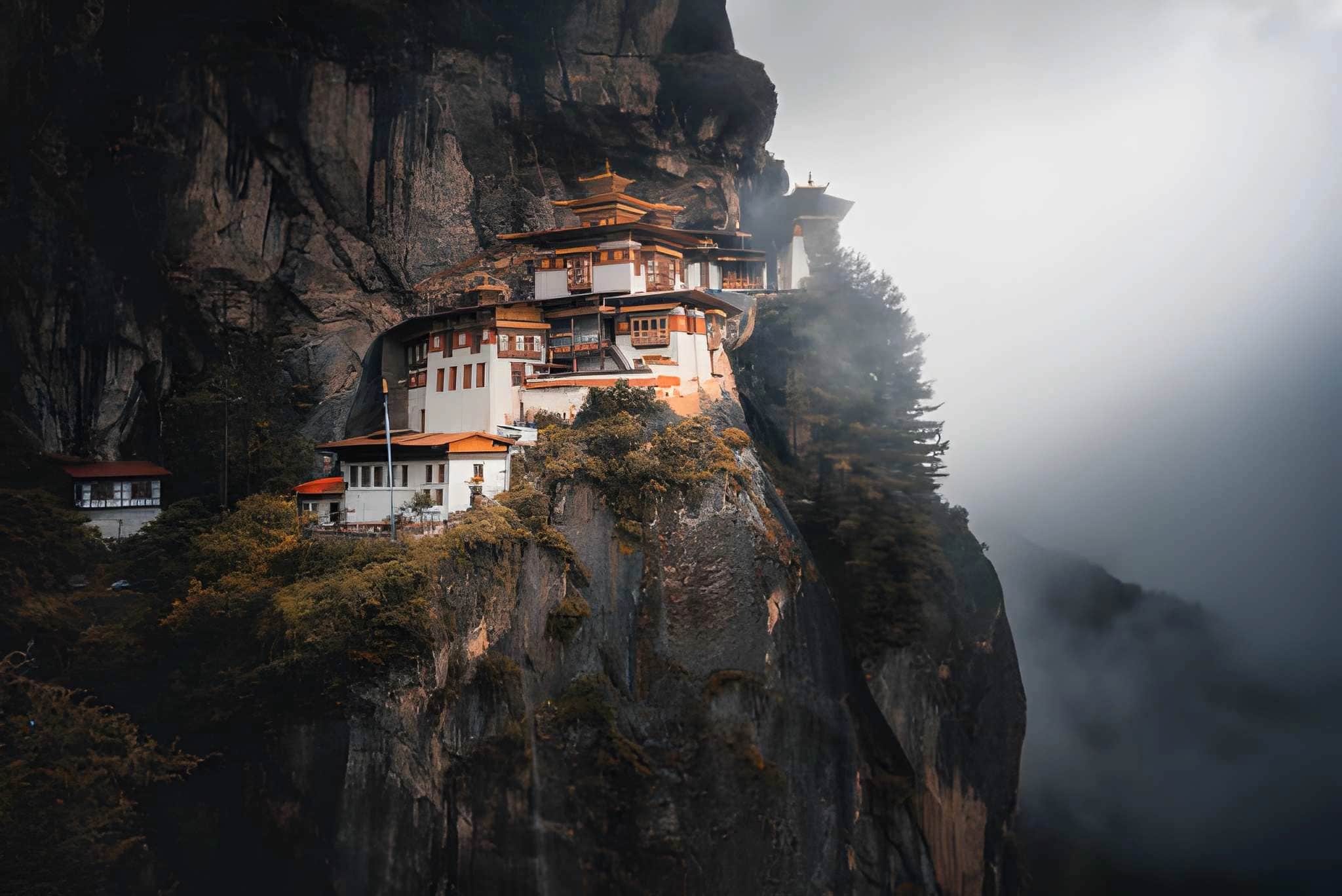
The trip will include the vibrant cities, ancient monasteries, and the peaceful images of Bhutan. Thimphu provides an insight into the traditions of life in the country with the Buddha Dordenma, Memorial Chorten, and Tashichho Dzong. The iconic Tiger Nest Monastery, which stands on the top of a cliff, is the cultural and religious heritage of Paro, and it represents the Buddhist legacy of Bhutan. These remarkable sites will be accompanied by traditional markets, handicraft stores, and traditional Bhutanese cuisine that will establish a close association with the local lifestyle.
The tour is an experience of a relaxing stay, personal transport, and guided tours by passionate tour guides to make the adventure experience smooth and fulfilling. Having a maximum of 20 people in a group, the emphasis is placed on personalized attention and luxurious comfort. Be it scenic tours and cultural tours, or the famous hike to the Tiger Nest monastery, this is the right mix of Bhutanese experience for a first-time traveler, or those who have travelled many places in search of a cultural holiday.
- Trek to the Tiger Nest Monastery, which is permanently placed on a hill that is 3,120 meters high.
- Discover the cultural sites in Thimphu such as Tashichho Dzong, Buddha Dordenma, and Memorial Chorten.
- Explore one of the best examples of Bhutanese architecture and religion with a visit to Paro Rinpung Dzong and Kyichu Lhakhang.
- See some of the most stunning Himalayan scenery and peaceful valleys on the way.
- Explore the local crafts and culture at local crafts and museums, as well as the traditional Bhutanese markets.
- During the visit, it is possible to enjoy local Bhutanese dishes, such as Ema Datshi and other local delicacies.
- Explore Bhutan neatly and in style with 3-star hotels, private transportation, and experienced Bhutanese guides.
The scenery is supported by the fact that your trip starts at the Paro International Airport, which is one of the most scenic airstrips in the world, where you get to see the Himalayas when you land. Then there is a one-hour drive to Thimphu capital city, located in a beautiful valley. On the journey, the visitors will observe clean pine forests, landscapes along the rivers, and hills.
When in Thimphu, you will visit the cultural sites, which include the Memorial Chorten, Buddha Dordenma and Tashichho Dzong, and then proceed to a traditional Bhutan welcome dinner. The end of the day will be a rest in the 3-star hotel, awaiting the next day of sightseeing.
Days two and three are spent in transit between Thimphu and Paro, and scenic journeys will enable you to have a glimpse of the clouds drifting over the fertile valleys of Bhutan as well as peaceful rivers passing through the country. The best part is the heart-pounding trek to Tiger Nest Monastery, which appears dramatically on a cliff at 3,120 metres and provides a spectacular Himalayan sight and a meditative experience.
Visits to Paro afternoon also cover the historic Paro Rinpung Dzong, Kyichu Lhakhang, Drukgyel Dzong, and local handicrafts markets. The trip will be a smooth mix of adventure, culture, and luxury as every evening will be topped with comfortable hotel stays and traditional Bhutanese dinners.
- Day01Day 1: Arrival in Paro - Thimphu transfer
When you reach Paro international airport, which is among the most scenic airports in the whole world, you will receive a warm reception from your guide and driver. A 1-hour drive on the way to the peaceful Bhutan capital, Thimphu, is a spectacular sight of the Paro valley, rivers, and pine forest. Once at the destination, you should check in at the hotel and have a look around after your long trip. You can start sightseeing with a visit to Tashichho Dzong, the administrative and religious center of the city, and then with the awe-inspiring Buddha Dordenma 51 meters 51-meter-high statue looking over the valley. Visit the Memorial Chorten, a stupa, constructed in memory of the third king of Bhutan, and end the day with a visit to the stupa and have dinner in the evening, a Bhutanese one.
- Day02Day 2: Thimphu Day out, Back to Paro
A hearty Bhutanese breakfast is the best way to kick off your day, after which you can explore Thimphu in detail.
Go to the Folk Heritage Museum to learn about the traditional life in Bhutan and visit the National Textile Museum to see beautiful handwoven textiles. Onward to the Motithang Takin Preserve that hosts the national animal in Bhutan and the Traditional Arts and Crafts School, where the 13 traditional arts of Bhutan are practiced. The day will include lunch in one of the local restaurants and a drive back to Paro, taking the picturesque route along valleys and hills. Visit a fortress-monastery with significant historical importance at Paro Rinpung Dzong and one of the oldest temples in Bhutan at Kyichu Lhakang. End the day with a walk through Paro town, visit local stores and cafes, and head into your hotel to sleep.
- Day03Day 3: Hike to Tiger Nest monastery - Afternoon Sightseeing in Paro
Following breakfast, you are set to receive one of the best activities on the tour, the hiking of the most famous Monastery known as the Tiger Nest Monastery (Taktsang) located on a cliff 3,120 meters above sea level. The road is roughly 4 km long, a one-way voyage and requires a journey of about 2-3 hours to climb the hill, through beautiful trees, small streams, and scenic points.
Once at the monastery, you will have time to visit the holy place, observe its structural designs, as well as have a panoramic view of the Paro valley below. Go down to the bottom and take a typical Bhutanese lunch. During the afternoon, visit Drukgyel Dzong, an ancient ruin with cultural value, and the Paro National Museum to learn about the heritage of Bhutan. Conclude the trip with a goodbye cultural dinner, where people will discuss the experience of the trip.
- Day04Day 4: Departure from Paro
Start your last day with a peaceful breakfast at the hotel and enjoy the peaceful scenery of the Paro valley. On check-out, your guide and driver will facilitate the short ride to Paro International Airport to make sure that you leave the place smoothly. This will be the end of your 4-day tour of Bhutan, and you will have a wonderful memory about the beautiful landscapes of the country, its colorful culture, and hospitality.
The best time to travel to Bhutan is during spring (March–May) and autumn (September–November). Spring brings blooming rhododendrons, pleasant temperatures, and clear mountain views, while autumn offers crisp weather, vibrant festivals, and excellent visibility of the Himalayan peaks. Summer (June–August) sees monsoon rains that can limit travel, and winter (December–February) is cold but quieter, with clear skies at lower altitudes. For comfortable weather, cultural experiences, and scenic beauty, spring and autumn are ideal.
The best time to travel to Bhutan is during spring (March–May) and autumn (September–November). Spring brings blooming rhododendrons, pleasant temperatures, and clear mountain views, while autumn offers crisp weather, vibrant festivals, and excellent visibility of the Himalayan peaks. Summer (June–August) sees monsoon rains that can limit travel, and winter (December–February) is cold but quieter, with clear skies at lower altitudes. For comfortable weather, cultural experiences, and scenic beauty, spring and autumn are ideal.
Certainly, Bhutan is a distinct tourist site, which is commonly referred to as the land of thunder dragon due to its stunning scenery, rich culture, and strong Buddhist culture. Though the country itself is a magical experience, there are certain travel considerations, cultural elements and practical factors that need to be considered by the travelers to facilitate a successful trip. Everything is included in this section, such as flights and visas, festivals, currency, safety and packing tips, and you have all the information you need to have when taking a comfortable and engaging trip.
Flight Information
The only international airport of Bhutan is the Paro International Airport (PBH), which is located between the Himalayan mountains. Flights into Paro are acquired only by highly trained pilots, as it is challenging in nature and thus makes the journey very exciting and subject to weather. Other airlines that provide services in major hubs like Kathmandu, Delhi, Bangkok, Singapore, and Dhaka include Airlines like Drukair and Bhutan Airlines.
There are also seats which are limited, and during the spring and autumn periods when tourists visit the country, it is important to book your flights early. It is important to be on time, and this would mean having to plan since it is possible to have delays or cancellations caused by fog or wind. Booking through licensed tour operators means that there will be ease of coordination between the flights, transfer, and accommodation.
Bhutan Visa Information
The majority of foreign visitors (not Indian, Bangladeshi, or Maldivian citizens) need a tourist visa in order to visit Bhutan. The visa procedure is peculiar as the tourists are not able to submit their applications on their own; it should be organized with the help of a licensed Bhutanese tourism operator.
All processing will be done by your operator who sends your documents, including a copy of a passport, to him and the validity of at least six months. Upon acceptance, you shall be sent a visa clearance letter, which you shall produce upon landing at Paro Airport. This program has made certain that every traveller has a guide and an itinerary to follow; this system has served to maintain the Bhutanese-controlled model of tourism and provide the traveller with a safe and structured adventure.
Travel Insurance
All tourists are required to be covered by travel insurance, as the country of Bhutan is mountainous and offers trekking activities at high altitude. Medical emergency, evacuation, trip cancellation and repatriation should be included in your insurance. Adventure activities should also be included in your policies, like trekking, in case you are going to hike to places like Tiger Nest Monastery or the valleys of high altitudes. Due to the primitive healthcare services in remote areas, full coverage means serenity in the event of accidents, ailments, or unexpected inconveniences. It is highly recommended to offer the insurance with a good international source before travelling to avoid any last-minute problems.
Health and Physical Fitness
Although Bhutan can be accessed by the majority of tourists, certain activities demand moderate fitness. Indicatively, the Tiger Nest Monastery hike entails a 4 km hiking distance to an elevation of 3120 meters above sea level, which is hectic, particularly for people who have never done such hikes.
Tourists are advised to take their time to adjust, consume a lot of water, and rest periodically. Any medical conditions that exist should be checked with a doctor before trying to achieve treks or hikes. Bringing necessary drugs and a simple first-aid kit is not a bad idea since the medical services in the rural areas might not be up to international standards. Physical preparation will make sure that you enjoy the natural and cultural sites of Bhutan in a safe way.
Weather and Packing Essentials.
Bhutan has four different seasons, and each of these seasons provides a different outlook of this land. The spring (March-May) has good weather, and rhododendrons are in blossom, making it very good for sightseeing and trekking. Summer (June-August) is hot with some monsoon rains, where the landscapes would turn to green sceneries.
Autumn (September-November) has a clear sky and crisp air and coincides with the major festivals -this is regarded as the peak tourist season. Winter (December- February) is freezing, particularly in the mountains, though it offers less traffic and tranquil cultural tours. The clothes, footwear, raincoat during the rainy season, and winter clothes should be packed by the travellers in a layered outfit, good hiking shoes, a raincoat in the rainy season and warm clothes in winter. Sunglasses, sunscreen, lip balm, moisturizer, and accessories are all you need to ensure that your stay in the high altitude area is not too uncomfortable because of sun exposure and dry air.
Cultural Considerations
The culture of Bhutan is closely related to Buddhist practices, and respect for the local customs is essential. When visiting monasteries, dzongs, and religious sites, modest clothes are needed, and, before entering sacred places, one has to take off his or her shoes. It is customary to walk clockwise around stupas and prayer wheels, and visitors are required not to show any public affection. It is always best to seek permission before taking pictures of locals and of monks in particular, and never take pictures of them without asking. Such practices lead to better appreciation of the culture, development of goodwill, and an opportunity to be able to appreciate Bhutan in a more meaningful and reverential manner.
Tipping Guidelines
Bhutanese do not tip, but welcome it. Among the suggestions are 5-10 dollars a day as a tour guide, 3-7 dollars a day as a driver and 1-3 dollars a service as hotel staff. There are restaurants where the service fee is charged, but an extra 5-10 percent on top of the service fee is always encouraged in case of outstanding service. Tipping is often done in either Bhutanese Ngultrum (BTN) or USD, and it is customary to tip using an envelope and to give it personally. Although small, this will be an expression of appreciation and friendliness as you continue with your journey and attentive service.
Safety and Security
As a nation with low crime rates, travellers find Bhutan to be a very safe place to visit, as the people are generally friendly. The general measures like locking up the precious items, bringing along a passport and a duplicate visa, and following safety measures during trekking are recommended. Most roads are mountainous and winding, and therefore anyone travelling on them should prepare in advance in case they are prone to motion sickness. The smoking inside the premises is limited, and the transportation of tobacco is prohibited without a permit. By taking simple precautionary measures, you can be sure that you will be able to travel in Bhutan and experience the natural and cultural beauty that it has.
Currency and Money Matters
The currency officially in use is the Bhutanese Ngultrum (BTN), pegged against the Indian Rupee, and also commonly used. Although one may use credit cards (Visa and MasterCard) in big hotels, high-end shopping centers and even in small restaurants, cash is vital in small towns and marketplaces. There are ATMs in Thimphu and Paro, but they may not necessarily accept international cards. It is advisable to always have enough BTN or USD to spend small amounts of money on, since the foreign exchange of currency is scarce in places that are not major cities. Learning the local currency practices will make your trip hassle-free.
Language and Communication
The official language of Bhutan is Dzongkha, although English is commonly used in tourist spots, hotels, as well as by guides. Hindi and Nepali are also known by many locals, and thus can be used to facilitate communication. It is better to study several Dzongkha phrases to use, such as: Kuzuzangpo la" (Hello), Kadrinche la" (Thank you) and Tashi Delek (Best wishes), which will enrich the communication and respect local culture. Most hotels have Wi-Fi, which can be slow in remote places. SIM cards (TashiCell or Bhutan Telecom) can be bought by the traveller at the airport or in town to maintain a regular mobile connection.
Transportation
Bhutan tourists move mostly by their own cars, which are convenient in mountainous places and curves. The distance between destinations drives in different geographical conditions; therefore, passengers are advised to carry medication in case they are susceptible to motion sickness. Air travel is few, and there are domestic flights between Paro and other regional airports like the Bumthang, but these are season-dependent. Safety, comfort, and flawless logistics are guaranteed by professional drivers in all parts of the country through organized tours.
Electricity and Charging
The electric system of Bhutan is 230 V / 50Hz with Type D, F and G sockets carrying the Indian or UK plugs. International tourists are advised to come with a universal travel adapter. Although in large cities and hotels, electricity does not fluctuate, in rural settings, it can sometimes break out and, therefore, having a backup charger or power bank is advisable. The majority of obligations include generator or backup power, which reduces the inconvenience of travellers.
Festivals and Public Holidays.
Bhutanese celebrations, especially Tsechus, have given a rare peek into the spiritual life of the country. Tsechus are mask dances, rituals and religious ceremonies and are conducted at various dzongs throughout the year. The most important ones are Paro Tsechu (March/April), Thimphu Tsechu (Sept/Oct), Punakha Drubchen (Feb/March), and Jambay Lhakhang Drup (Oct/Nov). Arranging a visit to a festival is a way of experiencing an immersion into the culture, breathtaking photo sites, and having a first-hand experience of Bhutanese cultural tradition.
Food and Dining
The Bhutanese cuisine is rich and daring and usually spicy, and one of the key spices in it is red chillies. The dishes that can be considered as iconic are Ema Datshi (chilli and cheese stew), Phaksha Paa (pork with chilli), Momo (dumplings), and red rice. Doma (betel nut) local snacks are also popular. Several of the hotels and restaurants serve tourists with Indian, Chinese and continental food, including vegetarian food. Trying the Bhutanese dishes on the spot entails a true experience of the Bhutanese culture and cuisine.
Cancellation and changes due to weather.
The topography and changeable weather conditions in Bhutan might lead to delays, cancellations or changes in the itinerary of a flight, especially during the monsoon (June-August), and winter (Dec-Feb). Planning a trip requires flexibility, and tour operators can make different arrangements in terms of transport and accommodation in case of any disruptions. Extensive travel insurance that covers interruptions in the trip is suggested to cover unexpected situations and give peace of mind.
Packing Essentials
Bhutan packing is to prepare for the unpredictable weather changes and activities. It is necessary to have layered outfits to adapt to the hot days and cold nights. Treks require the use of hiking shoes, and when it is in the monsoon season, rain gear is advisable. Sunglasses, sunscreen, lip balm and moisturizer are the accessories that are used to shield against intense sun and dry air at high altitudes. Considerate packing equals comfort and safety as well as a pleasant experience in Bhutan with its varied landscapes.
Time Zone
No daylight saving time. Bhutan has a single time zone, Bhutan Standard Time (BST, UTC +6). The awareness of the time gap is helpful to the international traveler who is organizing the flights, tours, and communications.
Shopping and Souvenirs
Bhutanese souvenirs such as handwoven textiles (Yathra, Kira, Gho), Thangka paintings, wooden masks, Himalayan teas and incense and traditional jewelry are popular. The payment methods in most of the stores are BTN or INR, and some accept credit cards. It is a low bargaining area, and prices are fixed. The souvenir shopping is a good opportunity to remember Bhutanese culture.
Photography Guidelines
It is always permitted to take photos outdoors, but inside the temples, monasteries, and sacred places, photography is forbidden. It is always important to seek permission before you take photographs of people, especially monks and adhere to the local practices. The use of drones is much restricted and ought to be accompanied by a special permit. These rules will help to avoid disrespect towards the Bhutanese culture and save the holiness of religious sites.
Give us a review
Pricing
Number of people
Price per person