



Beyond Everest: Discovering Nepal's Hidden Cultural Treks in Mustang and Beyond
Nepal is synonymous with towering peaks, legendary trails, and the lure of Everest Base Camp. Yet, for travellers seeking something quieter, deeper, and culturally immersive, the real treasures lie in Nepal’s hidden corners—places where mountains meet ancient villages, and traditions have endured for centuries.
Mustang, Dolpo, and the Nar-Phu Valley offer trekkers a journey not just through stunning landscapes but through living cultures that remain largely untouched by modern tourism. Beyond Everest, Nepal tells a story of quiet majesty, intimate encounters, and a pace of life that invites reflection and connection.
Mustang: A Kingdom Frozen in Time
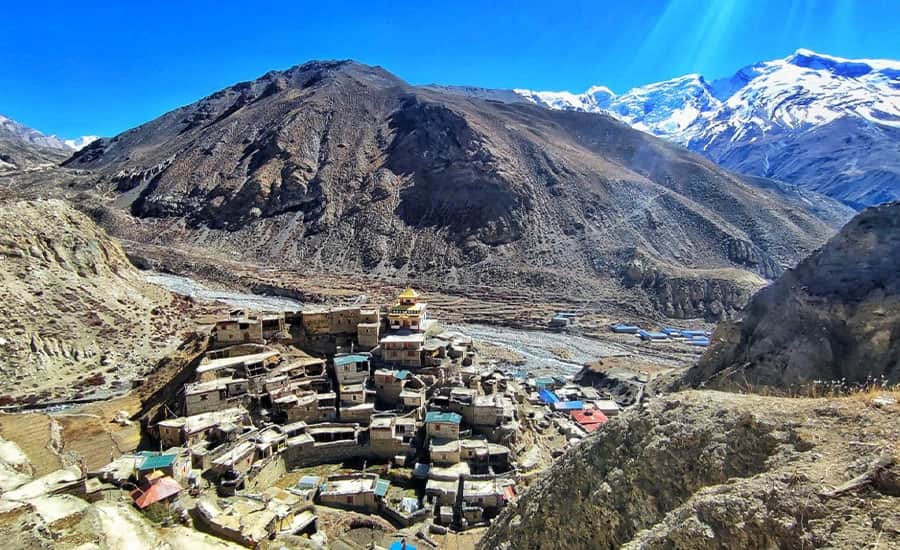
Tucked behind the Annapurna range, Mustang was a restricted area for decades, only opening to foreign travelers in the 1990s. Even today, it requires special permits, making it feel like a secret kingdom preserved in isolation. The landscape is striking: red sandstone cliffs rise sharply from desert-like valleys, caves carved into cliffs hint at ancient Buddhist practices, and strong midday sun paints every ridge and canyon in hues of copper and gold.
Trekking through Mustang is less about conquering summits and more about stepping into history. Lo Manthang, the walled capital, feels almost suspended in time. Narrow alleyways lead past houses built in the traditional Tibetan style, adorned with fluttering prayer flags. Monasteries, some centuries old, are hubs of spiritual activity where monks chant, and ritual objects are carefully maintained. This region demonstrates how landscape and culture intertwine: every canyon, every monastery, every festival has a story to tell.
Hidden Trails and Authentic Experiences
For trekkers who crave solitude and meaningful interaction, Mustang’s trails offer exactly that. Unlike Everest or Annapurna, where tea houses and lodges bustle with tourists, Mustang’s accommodations are small, often family-run, and deeply personal. Here, meals of dal bhat come with stories from elders who have lived in these valleys all their lives. Travellers are not just passing through—they are welcomed as guests, encouraged to observe and engage with local life at a pace dictated by the community, not the clock.
These trails allow for reflection, photography that captures the essence of place rather than posed tourists, and moments of quiet awe. Hiking along cliff-edge paths or across arid plateaus, one becomes acutely aware of both the fragility and resilience of this high desert environment. It is a trek that teaches patience, observation, and humility, reminding travellers that some of the most meaningful experiences are earned slowly, step by step.
Beyond Mustang: Dolpo and Nar-Phu Valley
While Mustang offers a remarkable window into hidden Nepal, other regions like Dolpo and the Nar-Phu Valley take the idea of off-the-beaten-path exploration even further. Dolpo, often referred to as “Little Tibet,” is characterised by ancient villages surrounded by high-altitude lakes and snow-capped peaks. The culture here is profoundly Tibetan: prayer wheels spin in the wind, herding communities follow seasonal migration routes, and monasteries maintain rituals unchanged for centuries. Trekkers are often rewarded with breathtaking views of turquoise lakes, the vastness of plateau landscapes, and encounters with locals whose way of life remains rooted in tradition.
Nar-Phu Valley, meanwhile, is a haven for trekkers seeking both challenge and cultural depth. The trail passes through isolated settlements where homes cluster around small fields, and yak caravans still transport goods across steep passes. Kang La Pass, one of the highest points on the trek, offers panoramic views, but the real reward lies in the valleys below: villages where festivals, rituals, and day-to-day life provide insight into a community that thrives despite remoteness and altitude.
Both Dolpo and Nar-Phu require careful preparation: permits, experienced guides, and an understanding of local culture ensure respectful and immersive experiences. Yet, for those willing to venture off the mainstream paths, these regions deliver something unforgettable—landscapes and cultural experiences that remain largely untouched by the pressures of mass tourism.
Festivals and Spiritual Encounters
Experiencing local festivals and rituals adds a deeper dimension to trekking in hidden Nepal. These events allow travellers to witness traditions in their authentic context, providing insights into communities that have preserved their customs for centuries.
Tiji Festival – Mustang
Tiji is a three-day celebration in Lo Manthang that marks the victory of good over evil. Masked dances, ritual chants, and ceremonial processions bring the streets alive with energy. Observing or participating in Tiji offers trekkers a unique glimpse into Mustang’s spiritual heritage and communal life.
Chhewar Festival – Dolpo
In Dolpo, Chhewar combines religious devotion with seasonal celebration. Villagers gather at monasteries for dances, prayers, and communal feasting. Travellers experience firsthand how these rituals are embedded in daily life, emphasising harmony between people, faith, and the environment.
Local Ceremonies – Nar-Phu Valley
Even in the remote Nar-Phu Valley, small ceremonies occur tied to agriculture and local calendars. These intimate gatherings often involve prayers, offerings, and traditional music, offering trekkers a glimpse into rituals that remain unaltered by modern tourism.
These festivals are not just entertainment—they are opportunities to engage with living culture, understand local beliefs, and witness the continuity of traditions that have survived centuries of isolation.
Practical Tips for Off-the-Beaten-Path Treks
Preparation is key when exploring Nepal’s hidden regions. Following these practical tips ensures safety, comfort, and respect for local communities:
Practical Tips for Off-the-Beaten-Path Treks
Preparation is essential when exploring Nepal’s hidden regions. The following practical tips provide accurate, actionable guidance:
- Permits:
- Upper Mustang Restricted Area Permit (RAC): $500 per person for 10–14 days; an additional $50 per day for extra days.
- Dolpo Permit: $500–$600 per person, depending on duration; issued by Nepal Tourism Board.
- Nar-Phu Valley: Requires Annapurna Conservation Area Permit (ACAP) $30, plus restricted area permit $20–$50.
- Permits must be arranged through licensed trekking agencies; foreign trekkers cannot obtain them independently.
- Guides:
- Local guide fee: $25–$30 per day in Mustang; $30–$35 in Dolpo and Nar-Phu.
- Guides are mandatory in restricted regions (Mustang, Dolpo) for safety and cultural guidance.
- Guides also handle permits, navigation, and liaising with local communities.
- Porters:
- Daily porter cost: $15–$20 in Mustang; $18–$25 in Dolpo and Nar-Phu.
- Recommended for carrying heavy backpacks, especially over high passes like Kang La (5,300m).
- Daily porter cost: $15–$20 in Mustang; $18–$25 in Dolpo and Nar-Phu.
- Accommodation:
- Tea houses in Mustang: $5–$15 per night, basic rooms with shared toilets.
- Dolpo and Nar-Phu: $10–$20 per night; more rustic, sometimes limited to one or two options per village.
- Always carry a sleeping bag suitable for -10°C at higher altitudes.
- Food & Water:
- Dal Bhat (traditional meal): $3–$5; other options include noodles, soups, and snacks.
- Carry water purification tablets or filters; streams may not be potable.
- High-altitude snacks like energy bars, nuts, and dried fruits are recommended.
- Connectivity & Electronics:
- Mobile coverage: Limited; Ncell SIM works in the main Mustang villages; no coverage in Dolpo/Nar-Phu.
- Solar chargers or power banks are essential; some lodges charge $1–$2 for electricity.
- Health & Safety:
- Acclimatize 1–2 days for every 1,000–1,500m gain above 3,000m.
- Carry a basic medical kit: painkillers, anti-altitude medication (Diamox), bandages, and blister treatment.
- Travel insurance covering high-altitude trekking is mandatory.
- Best Time to Trek:
- Spring (March–May): Clear skies, blooming rhododendrons, moderate temperatures.
- Autumn (September–November): Crisp weather, good visibility, post-monsoon trails.
- Winter (December–February) is possible, but very cold and snow may block passes.
- Cultural Etiquette:
- Always ask permission before photographing people or ceremonies.
- Follow monastery rules: remove shoes, dress modestly, and avoid loud behaviour.
These considerations may seem minor, but they transform the trekking experience into one that is safe, culturally respectful, and deeply rewarding.
Why Choose Hidden Nepal?
For travellers who have exploredthe Everest and Annapurna circuits, hidden Nepal offers a richer, more intimate experience. Here, trekking is about culture, community, and the rhythm of life in remote valleys, not just peaks and panoramas.
The rewards are subtle but profound: shared meals, conversations with elders, witnessing rituals, and the sense of being a guest in a world that has endured for centuries. Each village, monastery, and canyon is a living story, revealing resilience, spirituality, and traditions maintained through generations.
Hidden Nepal encourages travellers to slow down, observe, and connect deeply. Mustang, Dolpo, and Nar-Phu Valley remind us that Nepal’s grandeur exists not just in Everest’s shadow, but in quiet valleys, ancient monasteries, and the enduring smiles of communities that welcome visitors into their world.
Exploring these regions is a journey beyond trekking—it is an exploration of culture, human connection, and the subtle rhythms of life in one of the world’s most extraordinary countries.
Discover Hidden Nepal with Himalayan Vibes
Step off the beaten path and explore Mustang, Dolpo, and Nar-Phu. Immerse yourself in authentic culture, remote villages, and breathtaking landscapes. Book your trek today with Himalaya Vibes Holidays and experience the best of Himalayan travel.